
▶Lesson ContentUpdated
Ethereum Basics
Welcome, Explorer, to one of the most important lessons at Bankless Academy.
Today we’re looking at Ethereum: the next era of the internet. It’s a revolutionary platform powering a world of new internet apps and digital currencies.
A simple way to think of Ethereum is like the Google or Apple app store, but with some key differences:
- 💸 It uses
cryptocurrencyinstead offiatcurrency (the US dollar, the euro, or the Chinese yuan). - 📡 It’s a layer added directly to your internet browser, unlocking new functionality on websites.
- ⚖️ The store rules are agreed on by users and app builders. There’s no central corporation in charge.
To understand why millions of people are using Ethereum across the world, we need to look at its core mission…

A Global Town Square
Over the last forty years, the internet has become the world’s town square.
Here, total strangers connect, exchange ideas, goods and services, and even ignite global movements together. It's humanity's most powerful intersection of connection, creativity, and innovation.
But it has one big problem…

Centralized Services
The internet relies on a small group of corporations that don’t always have our best interests at heart.
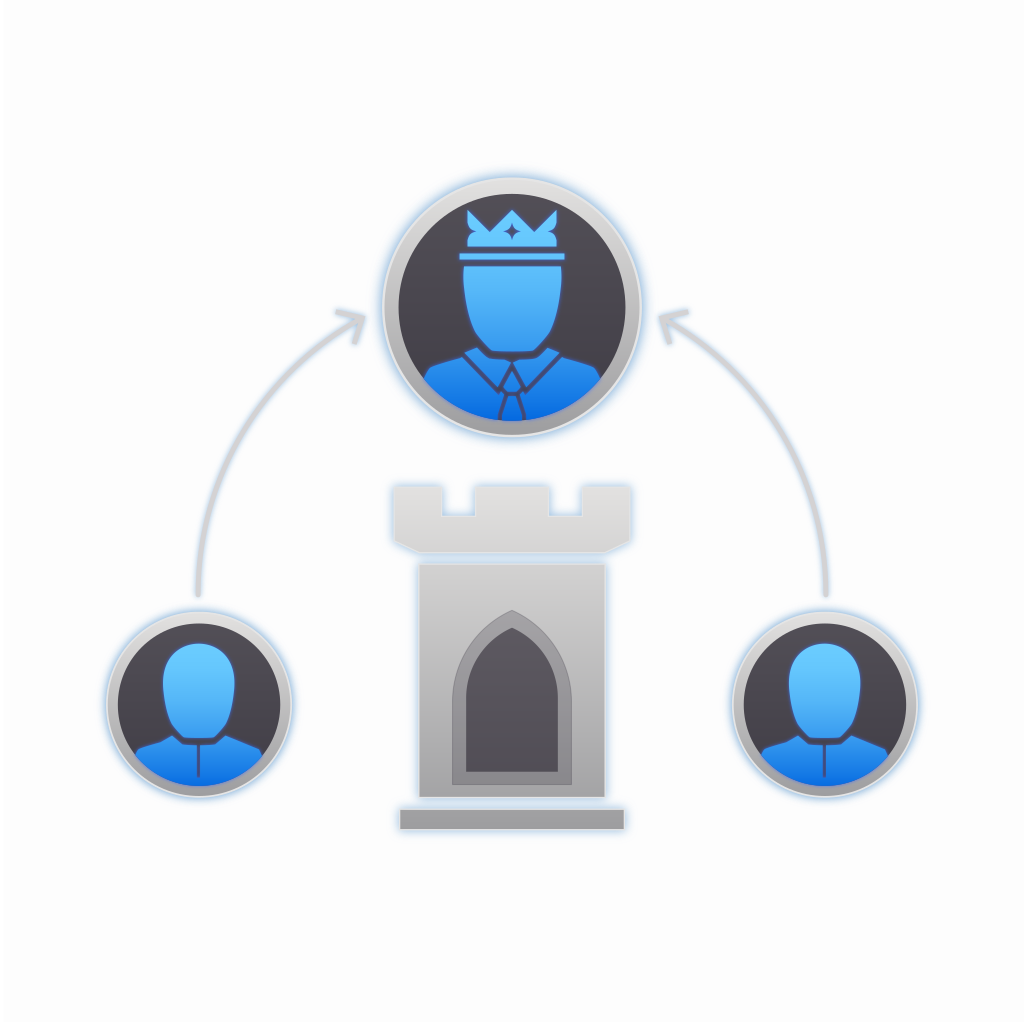
Centralized services have more control over the internet than ever before, acting as intermediaries for almost everything you do online.
Think of how big banks manage your purchases, Facebook and Instagram connect your social interactions, and Apple or Google control the apps you can have on your phone. Through their rules, fees, and corporate motives, they have an incredible influence over your digital exchanges.

One-sided Trades
We call them centralized services because all the power is in one place. It’s often like being stuck under the rule of a king who knows exactly how to get what he wants from you. You might be surprised at the reality of your trades…
💸 Banks charge you fees and invest your money for their own profit.
💳 Payment networks, like Visa & Mastercard, sell your purchase data to advertisers.
📞 Social platforms, like Instagram, can view your private conversations.
🪓 Content platforms, like YouTube, can freely delete creators’ entire careers, with no fair trial.
These shady rules and fees are often hidden away in the ‘Terms & Conditions’, and tend to get worse over time. Take a closer look at your favorite service agreements here: https://tosdr.org/ 👀
Knowledge Check 1
True or False: Most online services place an intermediary between you and the people you interact with.
-
[ ] True
-
[ ] False
An Open Internet
😤 Had enough of platforms that don’t respect your needs?
This is the value-extractive internet we’ve become used to.
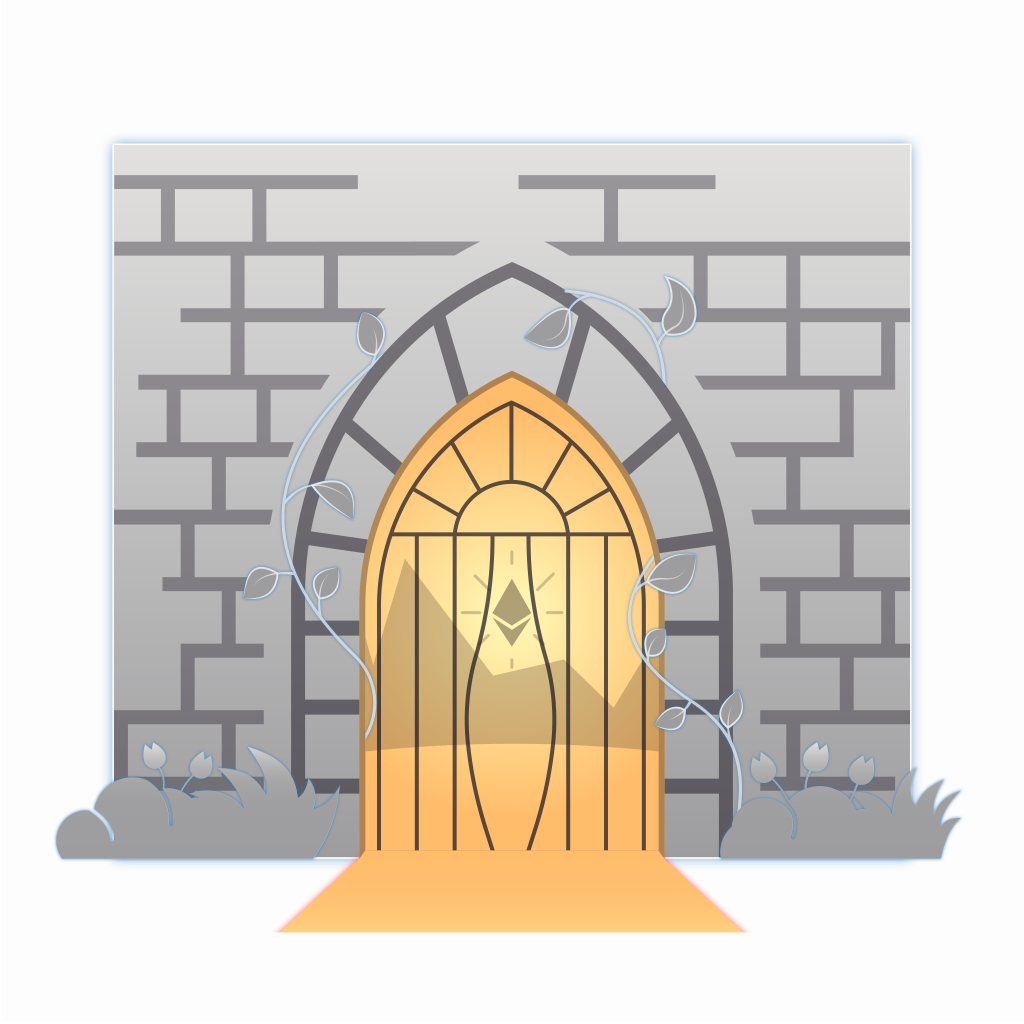
Called “walled gardens” for how restrictive these services are and how difficult they make it to leave, finding better alternatives can be time consuming and expensive. It often feels easier to just put up with the high fees, lack of transparency, and one-sided trades.
We need a fairer, more reliable internet, beyond intermediaries and their walled gardens. We need an online space where power is held by the user, the way the internet was initially built to be.
Peer-to-Peer Trades
The solution starts with changing how the internet is connected.
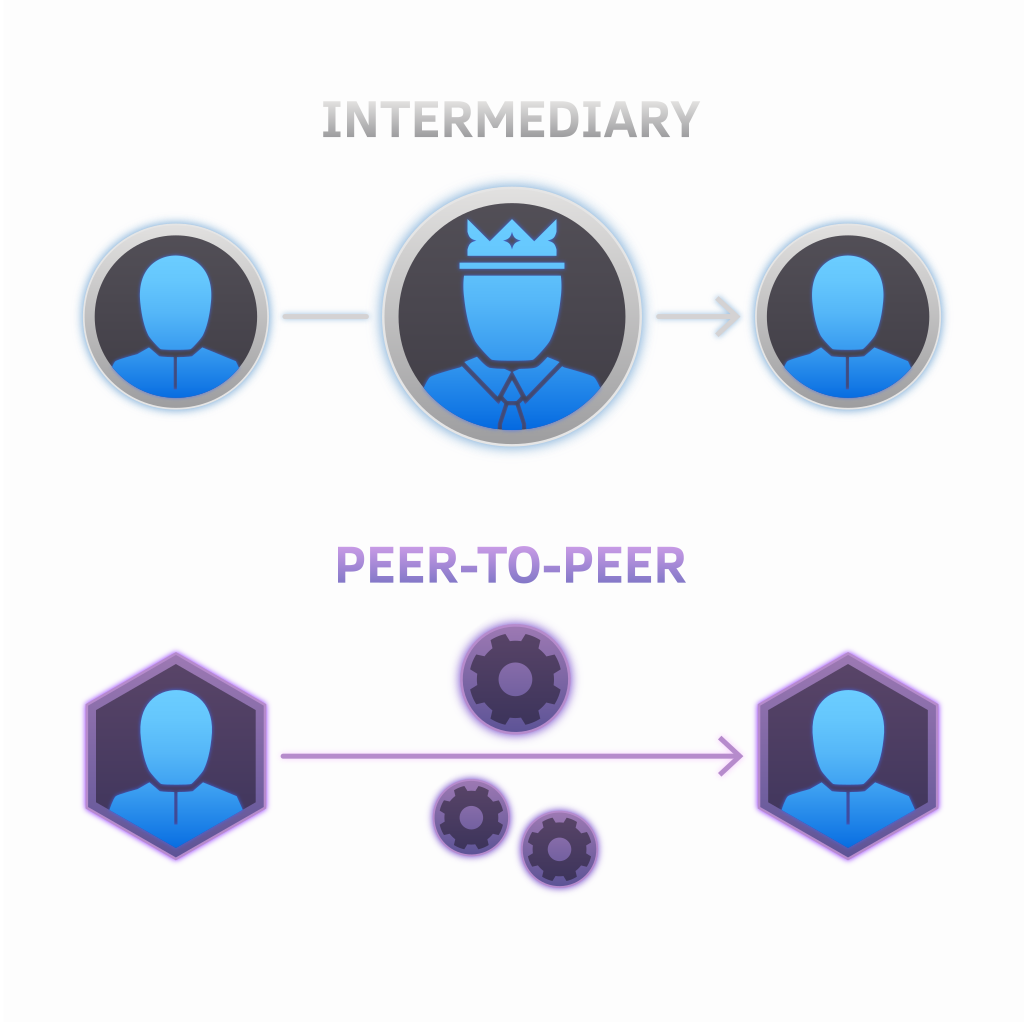
In traditional internet services, information or money from one peer goes through an intermediary checkpoint before arriving at its destination. In theory, intermediaries can do whatever they want before the trade completes.
Peer → Intermediary → Peer
But there’s a second model, called peer-to-peer networking. It replaces intermediary services with automated, transparent computer code.
Peer → Automation → Peer
It’s like replacing your intermediary with a self-service kiosk. Services become more predictable, fees go down, and users regain control.
As we’ll see, a peer-to-peer internet changes everything.
Knowledge Check 2
How can automation improve your online experiences?
-
[ ] By increasing the reach of intermediaries.
-
[ ] By giving participants more control.
Ethereum: The Open Internet
⚖️ Wouldn’t the internet be a better place if the same rules applied to everyone?
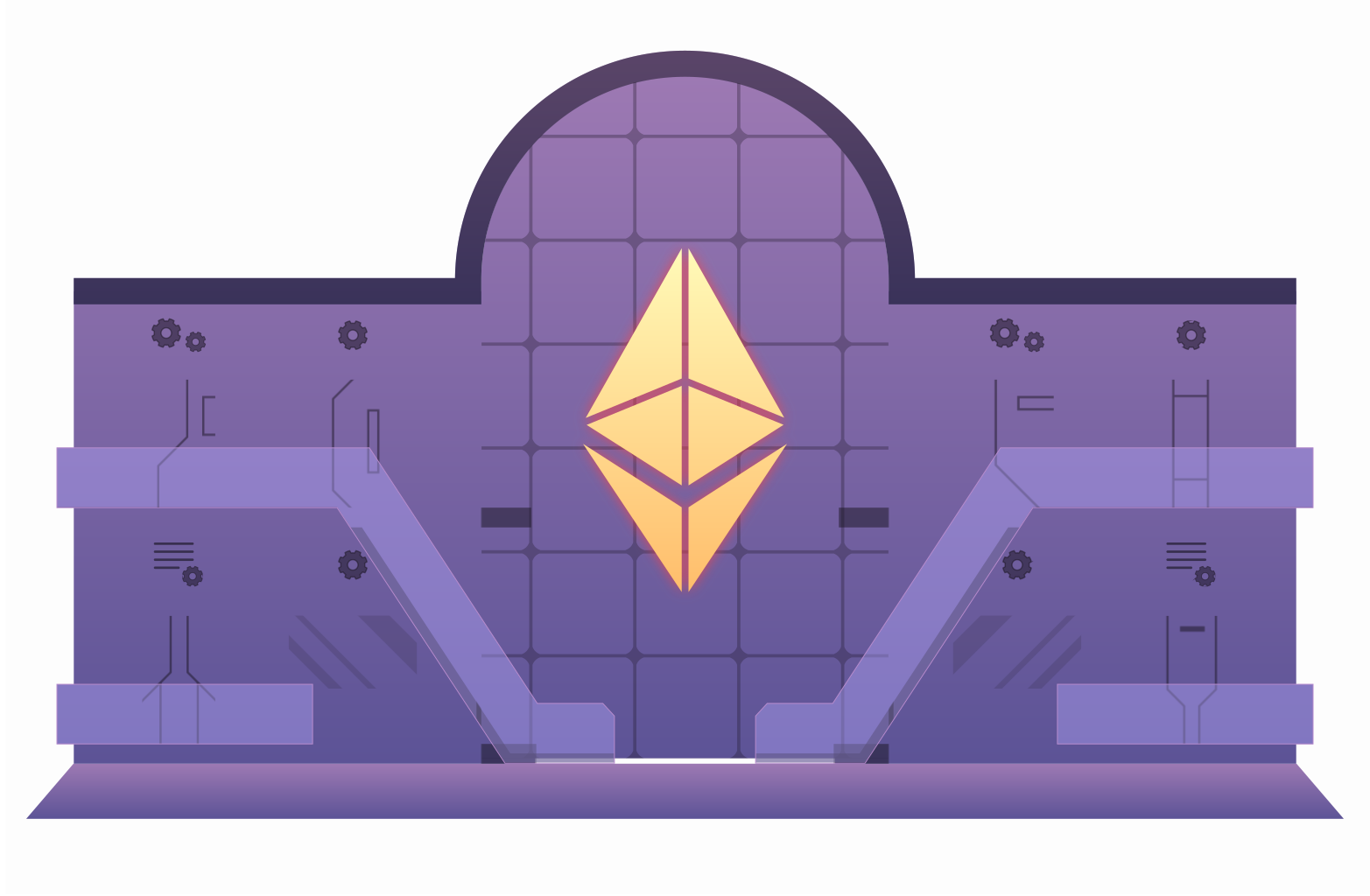
Think of Ethereum as a digital city, where everything (from businesses to public services) is run by self-service, transparent systems. There are no intermediaries, and anyone can inspect how each system works.
Transactions in the city are noted on a public record called the Ethereum blockchain. The blockchain tracks and stores digital property in the city, removing the need for another classic intermediary: the bank!
Every transaction pays a small fee. Most of that fee is destroyed, which can make the city’s currency, ether, scarcer as the city gets busier. A small tip rewards the computer that processes your transaction.
The city’s rules aren’t set by any company: changes are agreed on openly by builders, researchers, and users. Transparent code has replaced kings, and nobody is above the rules.
The Decentralized Economy
To access Ethereum you’ll use your computer or mobile device’s web browser. With just one account you can log into the entirety of this new internet: a single login called a crypto wallet. This universal account makes it easier to change services and escape “walled gardens”.
When you enable the Ethereum app layer, you can access new websites known as dApps. These are the self-service systems we mentioned earlier. dApps offer digital goods and services like:
- 🤝 sending or trading currencies, stocks and other digital goods, but with low fees and 24/7 service.
- 📻 connection with your favorite creators, but you can unlock unique perks and opportunities while ensuring your money goes directly to the artist.
- 👪 social media, but if you dislike the platform you can easily transfer your social circle to a new one.
- 🗳️ donating to your favorite projects, but even a $1 donation receives a large matching bonus, meaning greater impact.
- ⚙️ renting out your computer’s processing power for passive income.
By removing intermediaries, banks, and individual accounts for each service, Ethereum has made its economy decentralized (this is the “d” in “dApp”). dApps get better and better as they compete on quality, not unclear business practices and control.
Using a dApp
Using a dApp is similar to using regular apps and internet services.
Let’s simulate using a dApp for swapping crypto online. In this simulation we’ll swap USDC, an onchain US dollar issued by the company Circle (meaning Circle can freeze it), for ETH, Ethereum’s native currency.
- Connect your
crypto walletto the dApp’s website. - Confirm that you want to allow this dApp to interact with your Ethereum wallet.
- Swap all of your USDC to ETH by clicking “Maximum”.
- Initiate the swap.
- In your wallet, check the terms of your trade, and then sign.
- Great! Ethereum has processed your crypto swap!
Plugging your wallet into a dApp and swapping crypto is that easy. Now you can send it to friends, use it to make purchases, or try other financial service dApps.
Knowledge Check 3
On Ethereum, services get better and better because…
-
[ ] Business practices are more transparent.
-
[ ] You can easily change service providers.
-
[ ] Both of the above.
A Global Banking System
⌛ Do you want a faster, cheaper way to transfer money internationally?
Ethereum makes it possible for you to send and store crypto without intermediaries, with better services at lower costs.
⚡ With crypto, you can send money anywhere in the world in seconds. Most everyday activity now happens on Layer 2 networks, faster and cheaper lanes built on top of Ethereum, where a transfer can cost as little as one cent. Compare this to sending money through a bank, where they can charge you 3-4% in fees, and take 1-5 days.
🔐 You’re the only person with access to your Ethereum account. There’s no intermediary loaning out your savings or controlling what you do with your money. Funds are stored in your personal crypto wallet, the same one you used to connect to a dApp earlier.
On Ethereum, you’re your own bank, and you feel like it!
Sending a Payment
Let’s use another simulation to practice sending cryptocurrency. Try sending your 0.015 ETH to the Bankless Academy crypto wallet.
- Unlock your wallet.
- Inside of your wallet, select send.
- Adjust the amount to 0.015 ETH by clicking “Maximum”.
- Confirm the currency and amount.
- In contacts, select banklessacademy.eth.
- That’s it! Your international transfer was done in seconds, and no intermediary could stop you.
With Ethereum wallets, you can own and send more than just cryptocurrency. Transferable assets include any digital property that can be stored onchain. Digital art, club memberships, show tickets, stocks, website address ownership, and even real-world property rights have made their way onto Ethereum.
Knowledge Check 4
True or False: On Ethereum, your funds are stored in your own crypto wallet, not held by an intermediary.
-
[ ] True
-
[ ] False
How it Works
Let’s bring everything together by taking a quick look at how Ethereum makes it all possible.
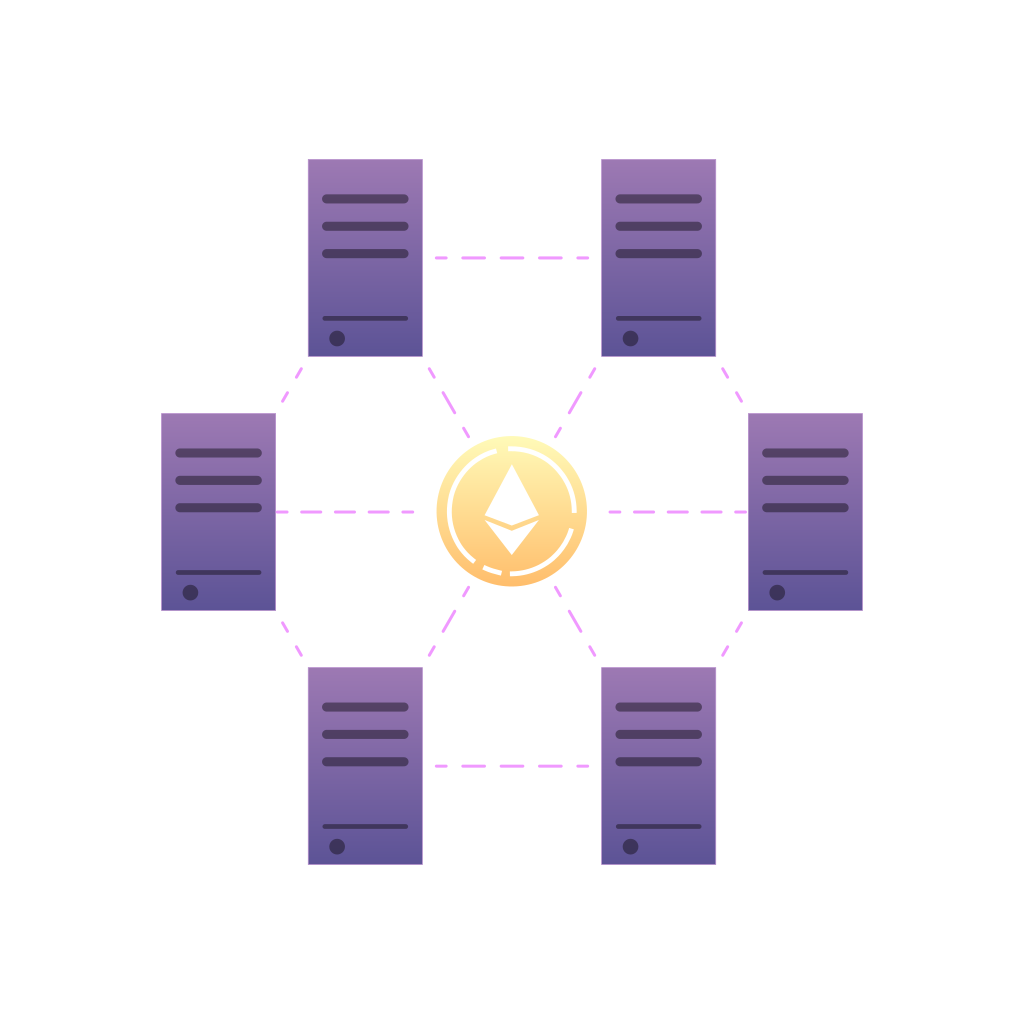
As a peer-to-peer network, Ethereum is made up of thousands of computers, called nodes, spread across the world. Anyone can run one. Some operators lock up (stake) their own ether to act as validator nodes: their software processes transactions and double-checks others’ results to prevent fraud, earning ether rewards in return. Most people join in through staking services rather than running their own computer.
How it Works (Pt. II)
The transaction you submitted earlier was processed by these Ethereum network validator nodes.
- Your ETH transaction was submitted to the Ethereum Network.
- A
validatorchecked your transaction for errors. Other validators double-checked their results. - Your transaction was added to the network’s public ledger, the
Ethereum blockchain. - We received your transferred ETH in our account.
You might be wondering why these validators don’t just run off with your funds. The short answer is because Ethereum makes this virtually impossible. Your upcoming lesson, “Blockchain Basics”, will help you understand more.
Common Questions
How was Ethereum created?
Ethereum launched in 2015, with the Ethereum Foundation coordinating its early development, a role it still plays today. Upgrades are agreed through an open, public process among developers, researchers, and the wider community; there is no company or token vote. This openness supports the network’s founding vision of an open internet.
Is Ethereum safe?
Your digital property on Ethereum can't be stolen directly. However, scammers can trick you into giving them access to your assets. Our “Web3 Security” lesson will teach you the basics of staying safe and avoiding simple mistakes that can cost you money.
Is Ethereum widely used?
Yes. In 2024, US regulators approved spot ETH investment funds (ETFs), letting people invest in Ethereum through the traditional stock market. Businesses, such as Sony and Visa, are even building on it.
Is Ethereum used for criminal activity?
Industry research by Chainalysis consistently estimates that less than 1% of cryptocurrency transaction volume is linked to criminal activity. This is far below the estimated 2-5% of global GDP suspected to be involved in criminal activity. Ethereum’s high transparency also makes it easy for investigators to track and prosecute criminals acting onchain.
Is Ethereum energy efficient?
As Ethereum’s daily usage grew the community identified a growing environmental impact. A major network upgrade, called 'The Merge', reduced Ethereum's energy consumption by 99.9%. This achievement showcases Ethereum's adaptability to the needs of its users!
How can I invest in Ethereum?
To invest in Ethereum, you’ll want to own ETH, the network’s native cryptocurrency. ETH can be bought through your crypto wallet; we’ll be helping you create yours in the next lesson. You can also buy ETH on a centralized exchange like Coinbase or Binance, but you won’t be able to use it on Ethereum until you transfer it to a wallet.
Joining the Movement
💪 It’s time to take control of your digital life.
Ethereum is eroding the walls that intermediaries have put up around their corners of the internet, transforming an economy of value-extraction into one of value-creation. It’s time for powerful yet fair online services, true ownership over your digital assets, bold new communities, transformative work opportunities, and more.
Ready to make your mark?
To start your journey you’ll need to create your crypto wallet. This is your passport to the world of Ethereum. We’ll set up yours in your next lesson, “Wallet Basics”.
Knowledge Check 5
How do you imagine yourself using Ethereum? (Check all that apply)
- [ ] Exploring new digital goods and services.
- [ ] Sending money internationally.
- [ ] Investing in Ethereum projects.
- [ ] Connecting with the artists I love.
- [ ] Contributing to powerful community projects.
- [ ] Building innovative dApps.