
Layer 1 Blockchains
Introduction
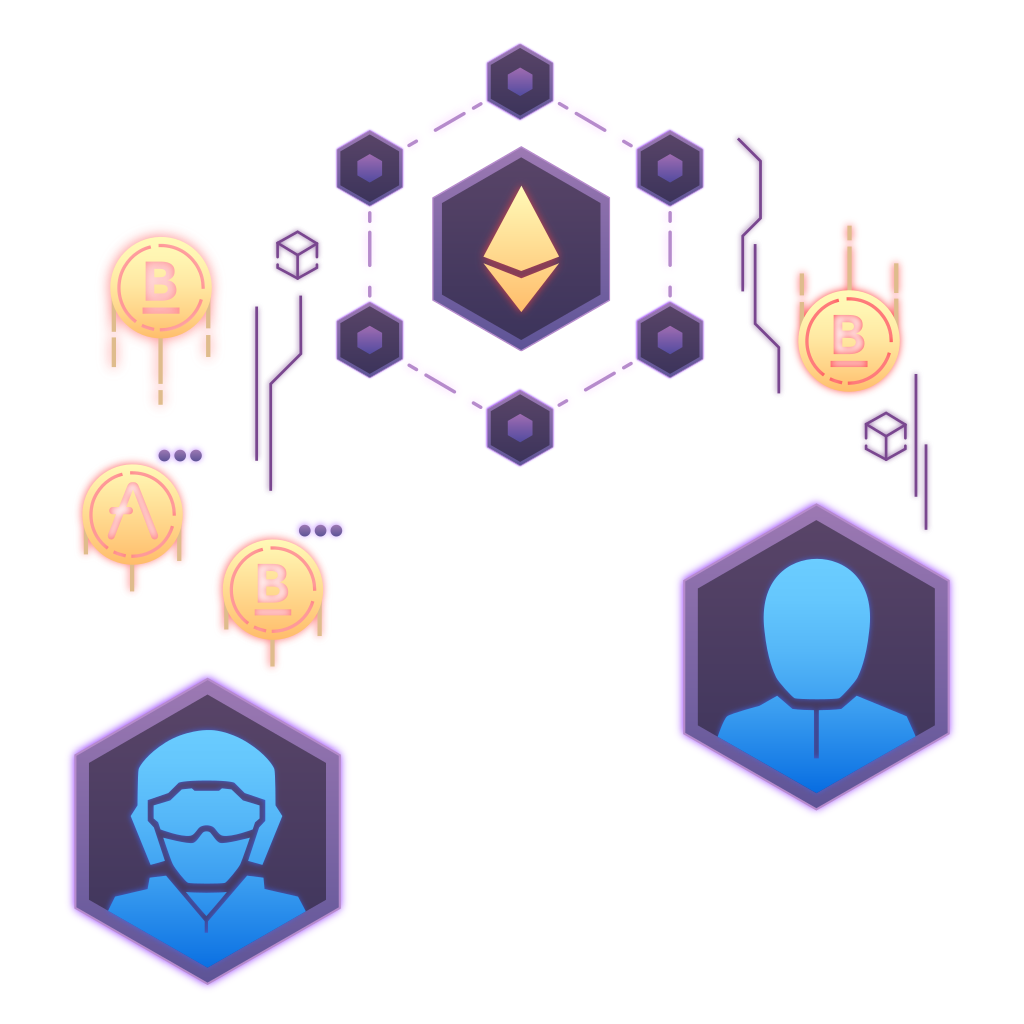
Problems emerge when more users want to use a blockchain network than it can handle. Large demand for blockspace can be temporary or can last as long as users continue to have a strong desire to use the blockchain. In times of high demand, users bid against each other to have their transactions processed quickly, and fees rise, pricing out users with less capital.
This lesson explores why Ethereum and other blockchains are subject to the Blockchain Trilemma, how the Trilemma is the root cause of the problems described above, and how the Trilemma affects Ethereum’s plans for serving the needs of all its users. We will look at the tradeoffs several blockchains have made concerning the Blockchain Trilemma, and what those tradeoffs mean for Academy Explorers.
Blockchain Trilemma
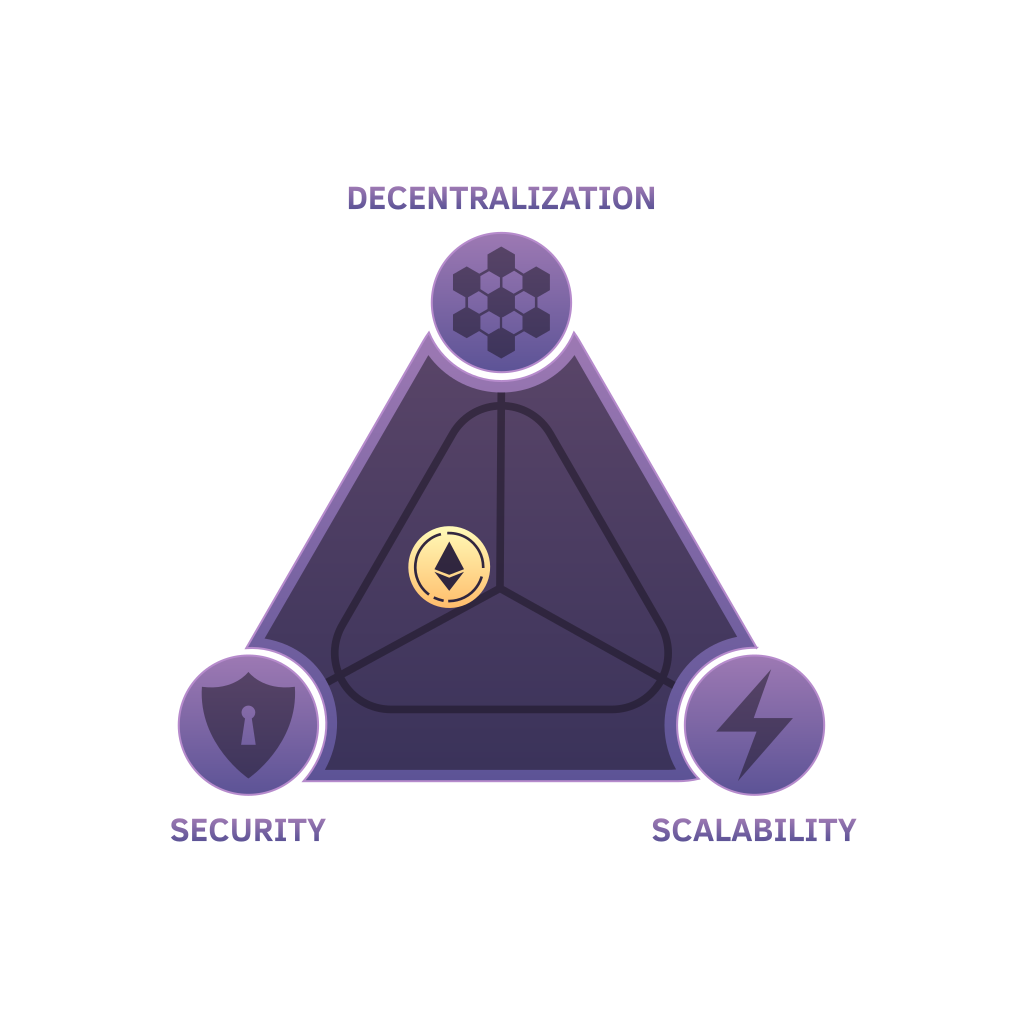
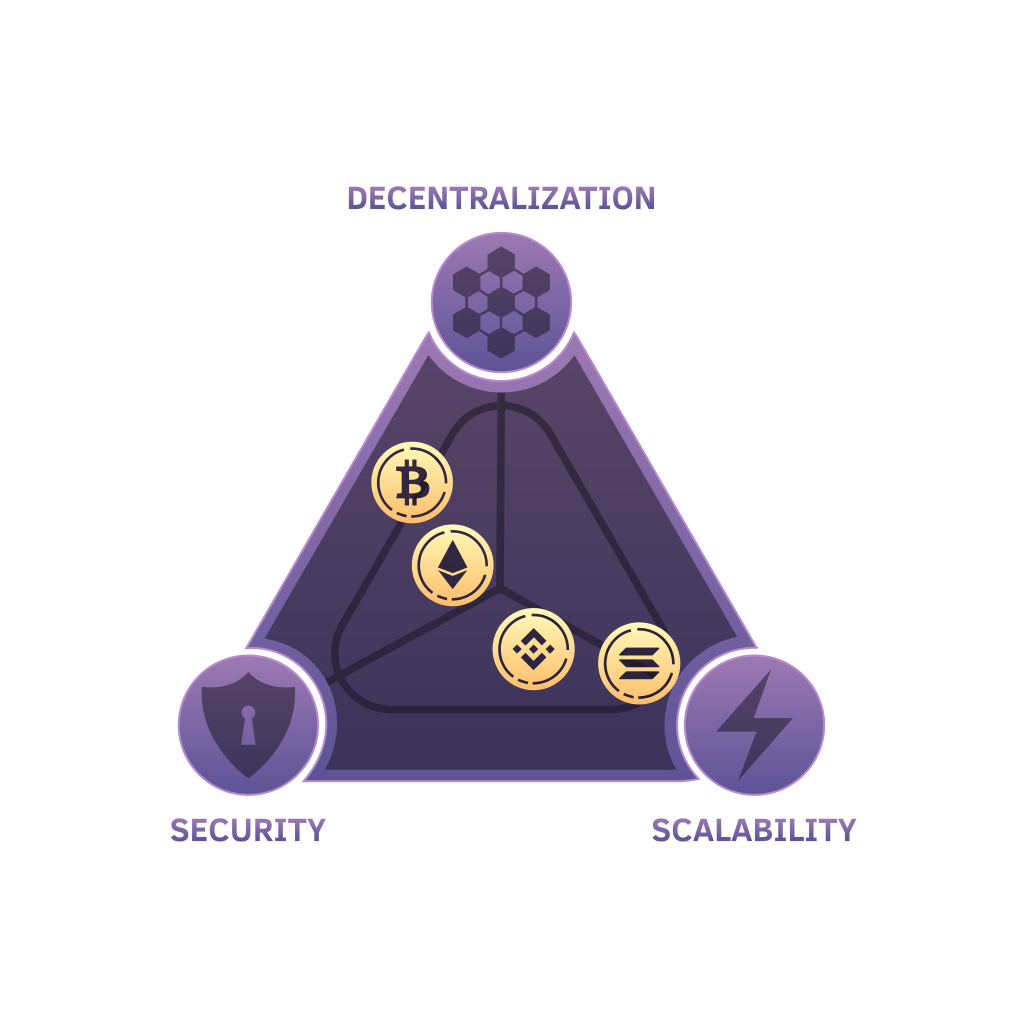
As implied by the word trilemma, there are three qualities of blockchains that compete with each other and prevent optimizing for all three at once.
These are: Security, Scalability, and Decentralization.
For a blockchain to serve as an unbiased foundation for a monetary system at a global scale, it should excel in all three aspects. A monetary system needs to be secure from fraud, safe from attacks by censors through decentralization, and scalable to meet the needs of over 8 billion humans in a global society.
Knowledge Check 1
The Blockchain Trilemma describes the relationship between:
-
[ ] ethereum, bitcoin, and altcoins
-
[ ] security, censorship, and fraud
-
[ ] decentralization, scalability, and security
-
[ ] security, speed, and low fees
Security and Consensus
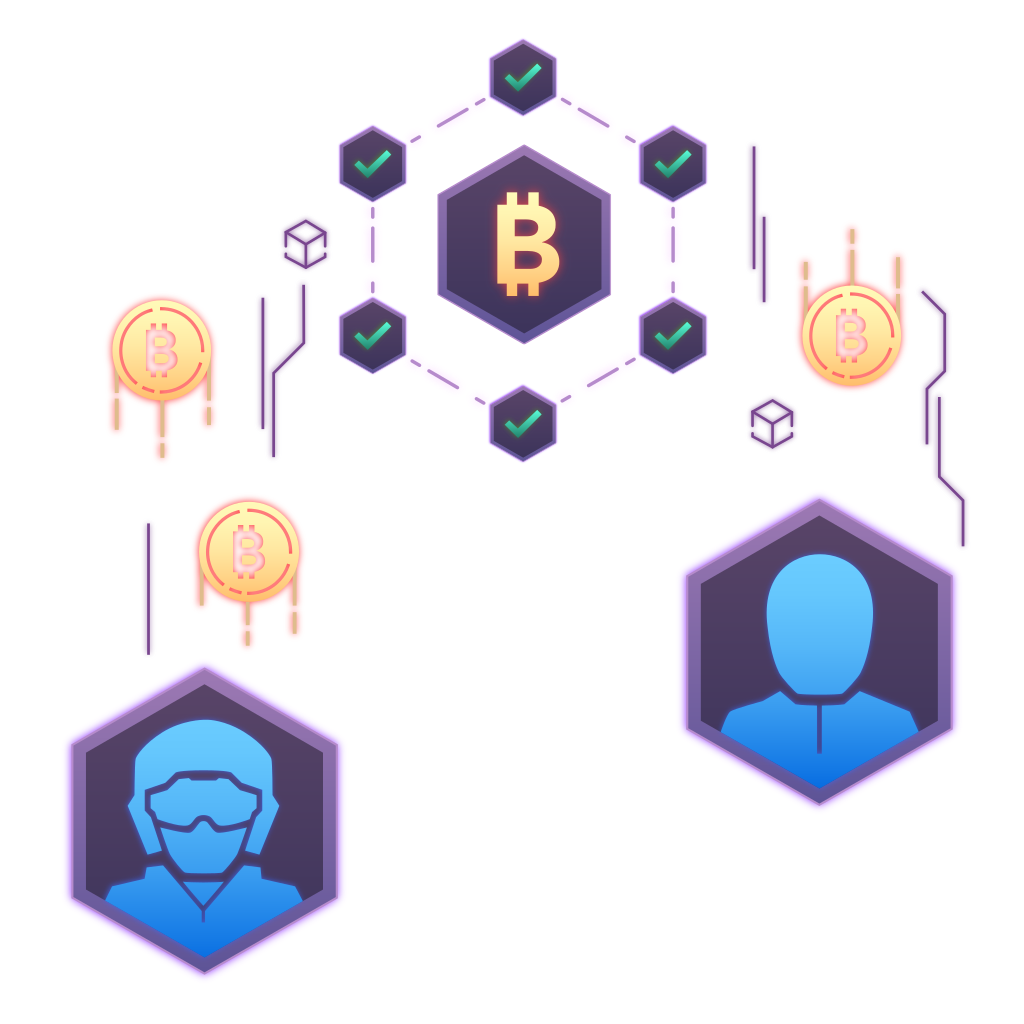
Security is the most foundational requirement for a public blockchain. Computers within a network (such as a blockchain network) must agree on what transactions have truly happened to work together; this agreement is called consensus. A blockchain is secure if attackers cannot disrupt the network from agreeing on that truth. Consensus algorithms are designed to resist these attacks.
Chains like Bitcoin that use Proof of Work consensus protect this agreement by making block production highly competitive; each block producer races to solve a math problem. The first to do so wins the right to create the next block and receives the monetary block reward that comes with it. Rewriting the chain’s recent history would require massive investments in computing power and energy, so an attacker would likely spend more than they’d gain.
Knowledge Check 2
Blockchain consensus for cryptocurrencies is:
-
[ ] The process where nodes agree on what has happened on-chain
-
[ ] Important for everyone in that chain’s ecosystem to prevent fraud
-
[ ] Secured through economic incentives
-
[ ] All of the above
Security and Attacks
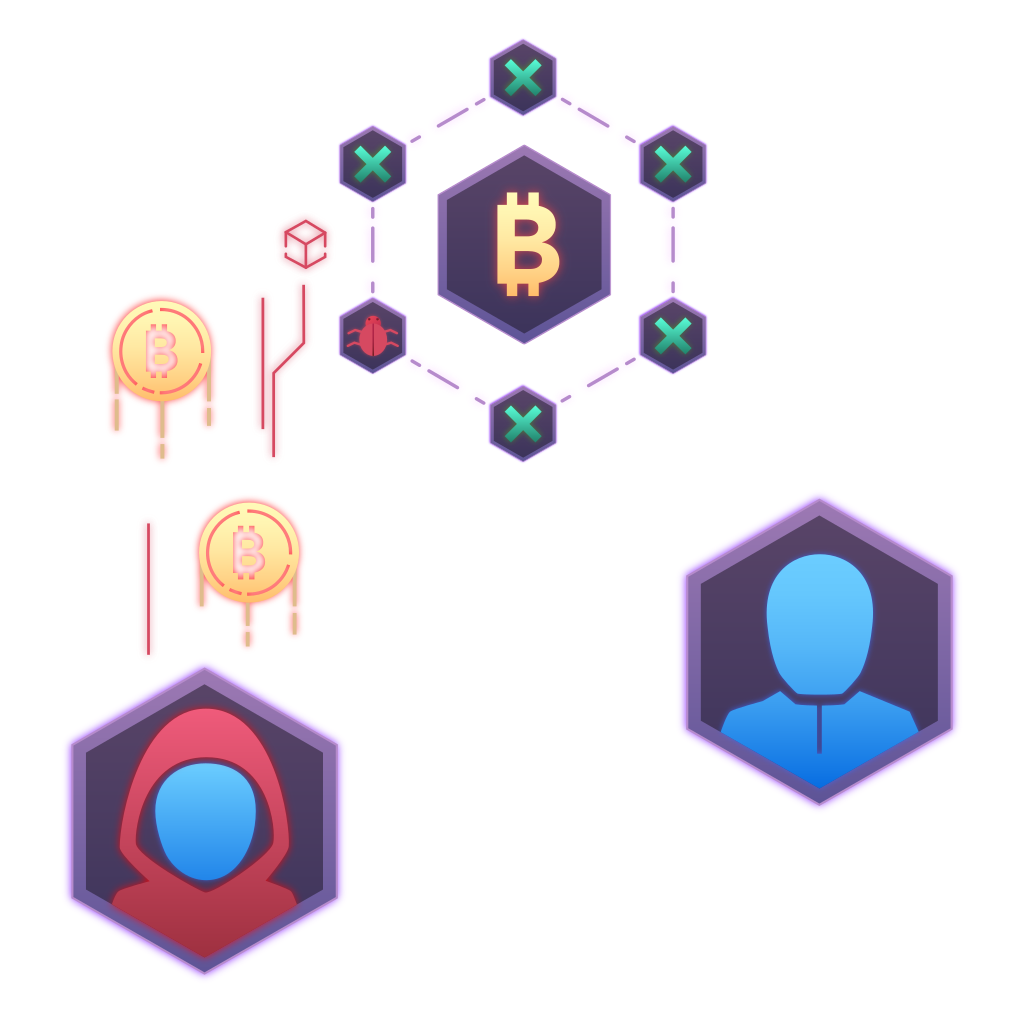
One potential form of attack on blockchain consensus is a 51% attack; an attacker controlling the majority of a network’s consensus power can reverse recent transactions to spend the same coins twice, or censor new ones. They cannot fake signatures or spend anyone else’s funds. This majority means 51% of the computing power in Proof of Work consensus and 51% of the stake in Proof of Stake consensus, a massive capital investment. And in Proof of Stake, provable cheating such as signing two conflicting blocks gets that stake destroyed (called slashing); an attacker would likely lose more than they’d gain.
In Proof of Stake consensus, the block producer isn’t chosen through competition but is randomly assigned instead. Like with Proof of Work, the consensus algorithm ensures that any single entity cannot regularly “win” the right to create a new block.
Knowledge Check 3
The end-goal of a 51% attack is to:
-
[ ] Disrupt mining operations
-
[ ] Double-spend coins or censor transactions
-
[ ] Create a new cryptocurrency
-
[ ] Eliminate the other 49%
Scalability - Throughput
Scalability refers to a blockchain’s ability to process many transactions quickly. Two parts determine a blockchain’s scalability: throughput and finality.
Transaction throughput: How many transactions a blockchain can process at once, usually measured in transactions per second (TPS).
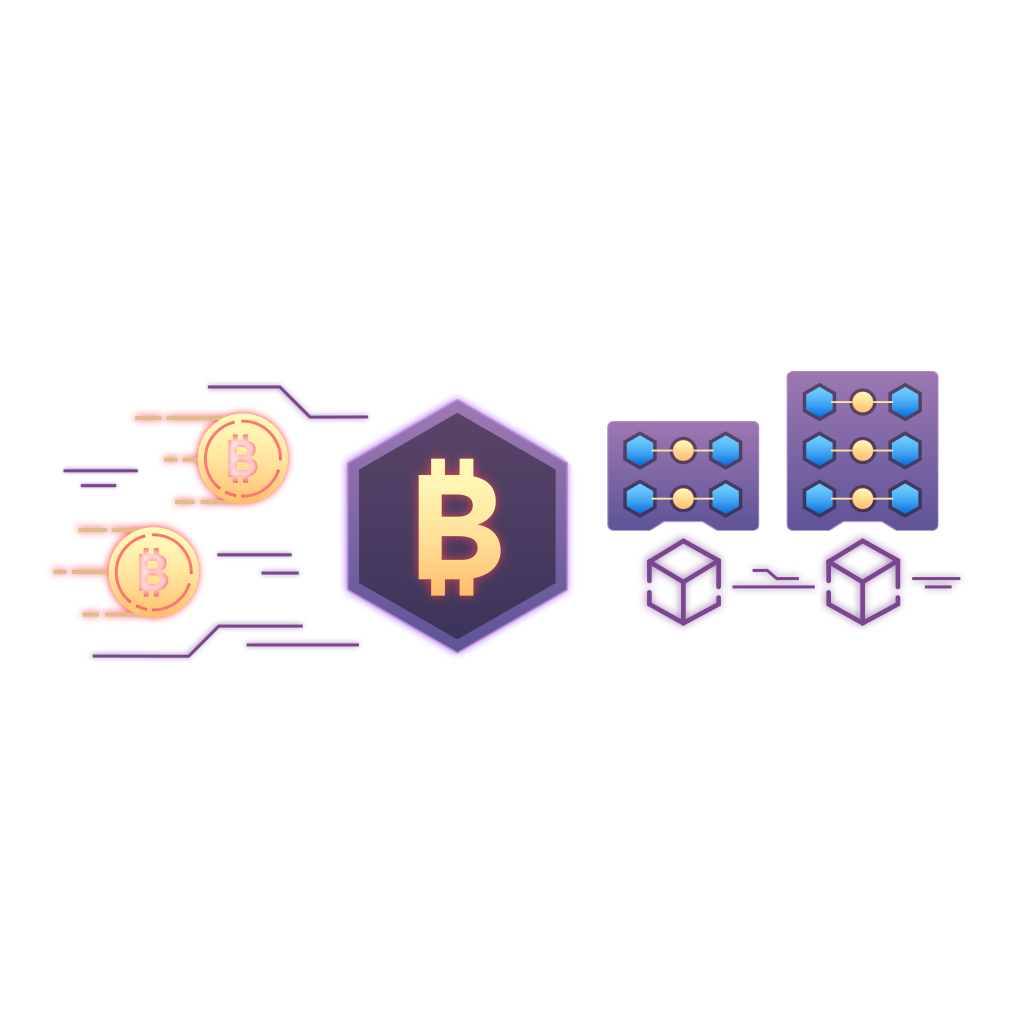
Imagine many people waiting at a bus stop with more arriving every minute, they all want to travel. But there are only so many people that can travel by bus. To clear the bus stop of people faster, you’d have to use bigger buses (more people) or make the buses run more often (less time). It works the same way with trying to fit many transactions into the small amount of block space available for each block. You can see this visualization with live data at https://txstreet.com/v/eth-btc.
Knowledge Check 4
Which of the following is true for the bus stop analogy for blockchain transactions?
-
[ ] People (transactions) are grouped together into buses (blocks)
-
[ ] Each bus (block) fits a limited number of people (transactions)
-
[ ] Moving more people (transactions) needs bigger or more buses (blocks)
-
[ ] All of the above
Scalability - Finality
The second aspect of blockchain scalability is:
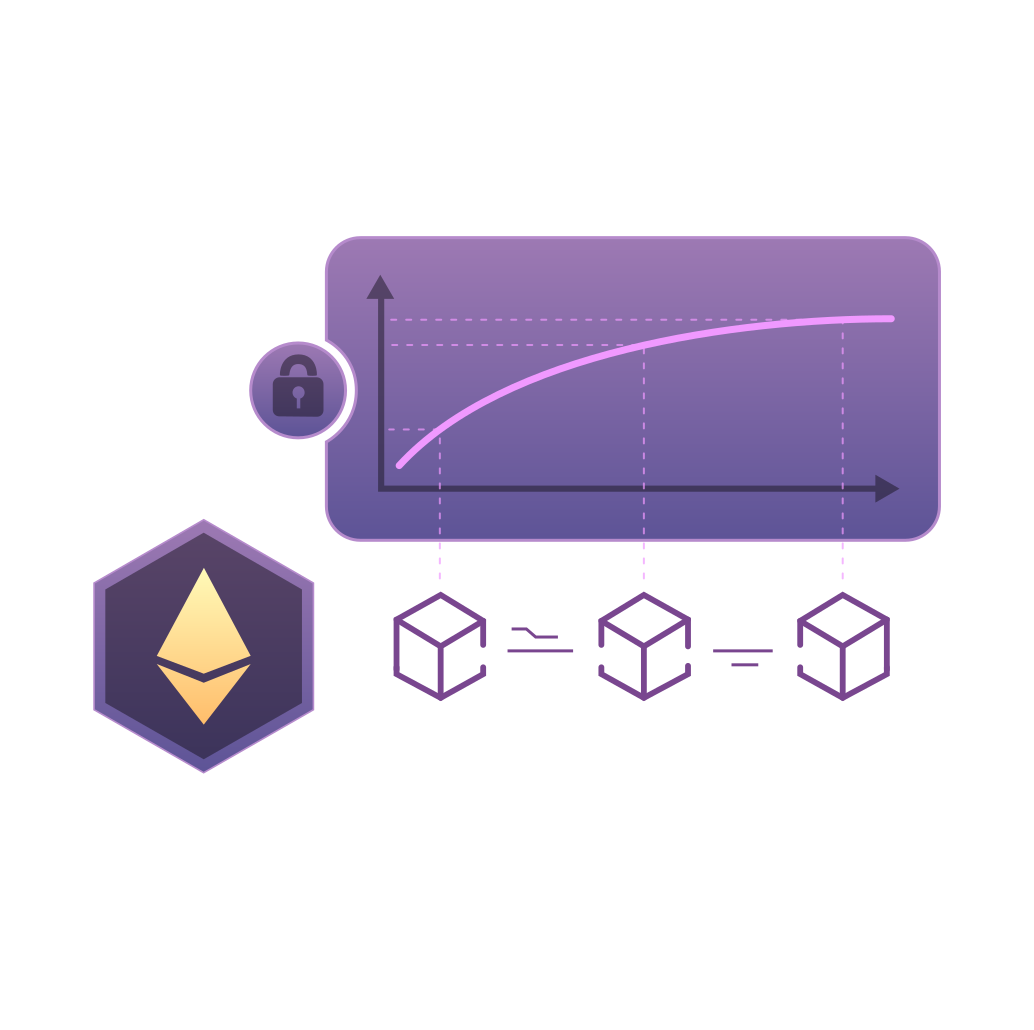
Finality: When can we be reasonably sure a transaction won’t get changed or reversed?
In Proof of Work chains like Bitcoin, finality is measured in blocks: the more blocks added to the chain after your transaction, the more sure you can be it won’t get reverted. Remember, a secure consensus algorithm makes it very expensive to change past blocks, and the expense grows the farther back someone tries to change. Bitcoin produces a new block roughly every 10 minutes, so waiting for several confirmations takes about an hour. Ethereum’s Proof of Stake takes a different route: validators vote to finalize blocks, and after about 13 minutes (two epochs of votes) a transaction is final.
Decentralization distributes power
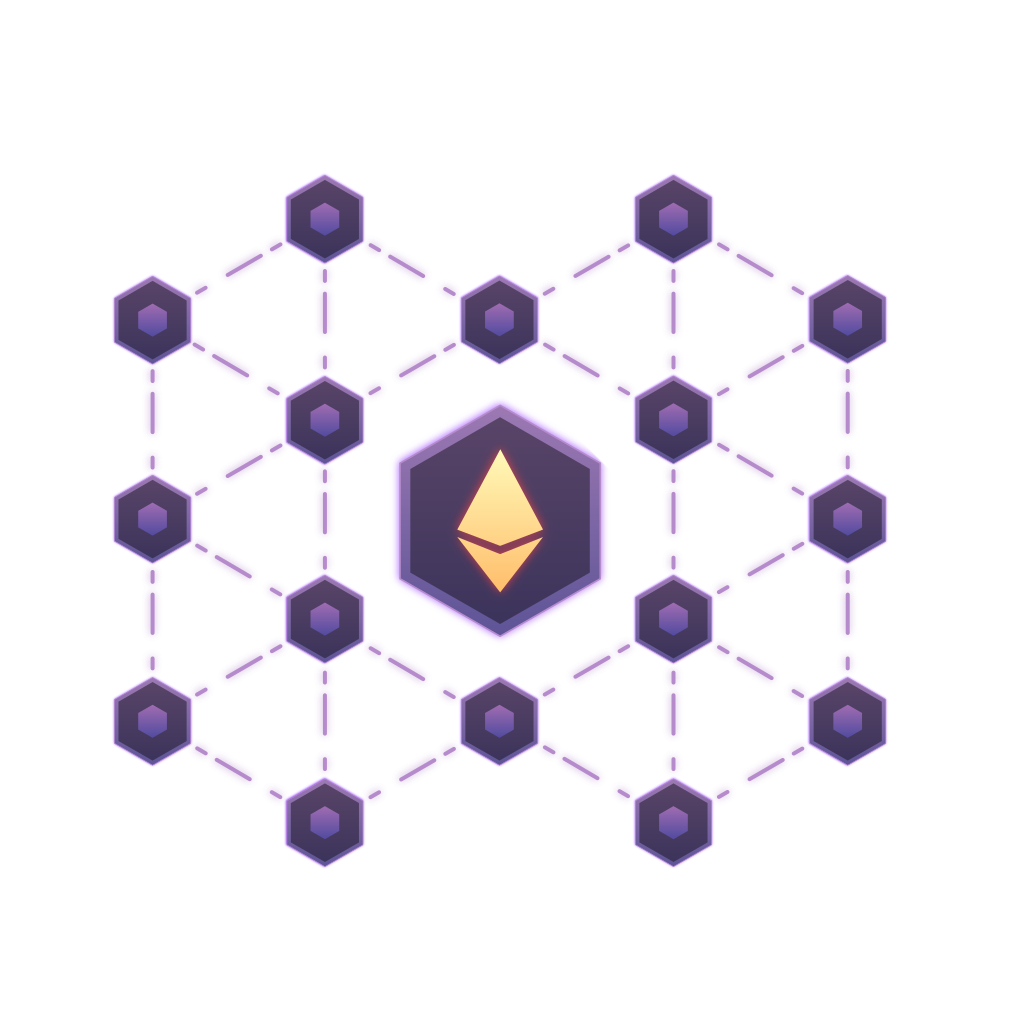
Decentralization is the final basis of the blockchain trilemma: the process of transferring control and decision-making from a single entity to a distributed network of many. Decentralization is the fundamental principle that enables blockchains to be permissionless and censorship-resistant; anyone can use decentralized blockchains, and anyone can build software using them.
Centralized platforms like Facebook and Twitter can deactivate anyone’s account at any time. Many influential streamers on Twitch or Tiktok have found themselves removed from their platforms without cause. Even if social media users can reinstate their accounts, it can be a long and painful process. Without decentralization, a blockchain ledger is just a financial spreadsheet on a bank computer; the bankers decide who gets to create an account with them. A permissionless network means authority is sufficiently decentralized; there is no way to remove a person or entity’s access.
Knowledge Check 5
Which of these statements is NOT true for decentralization?
-
[ ] Decentralization makes blockchains censorship-resistant
-
[ ] Decentralization makes blockchains permissionless
-
[ ] Decentralization helps authoritarian powers to maintain control
-
[ ] Anyone anywhere can use permissionless systems
Is it decentralized?
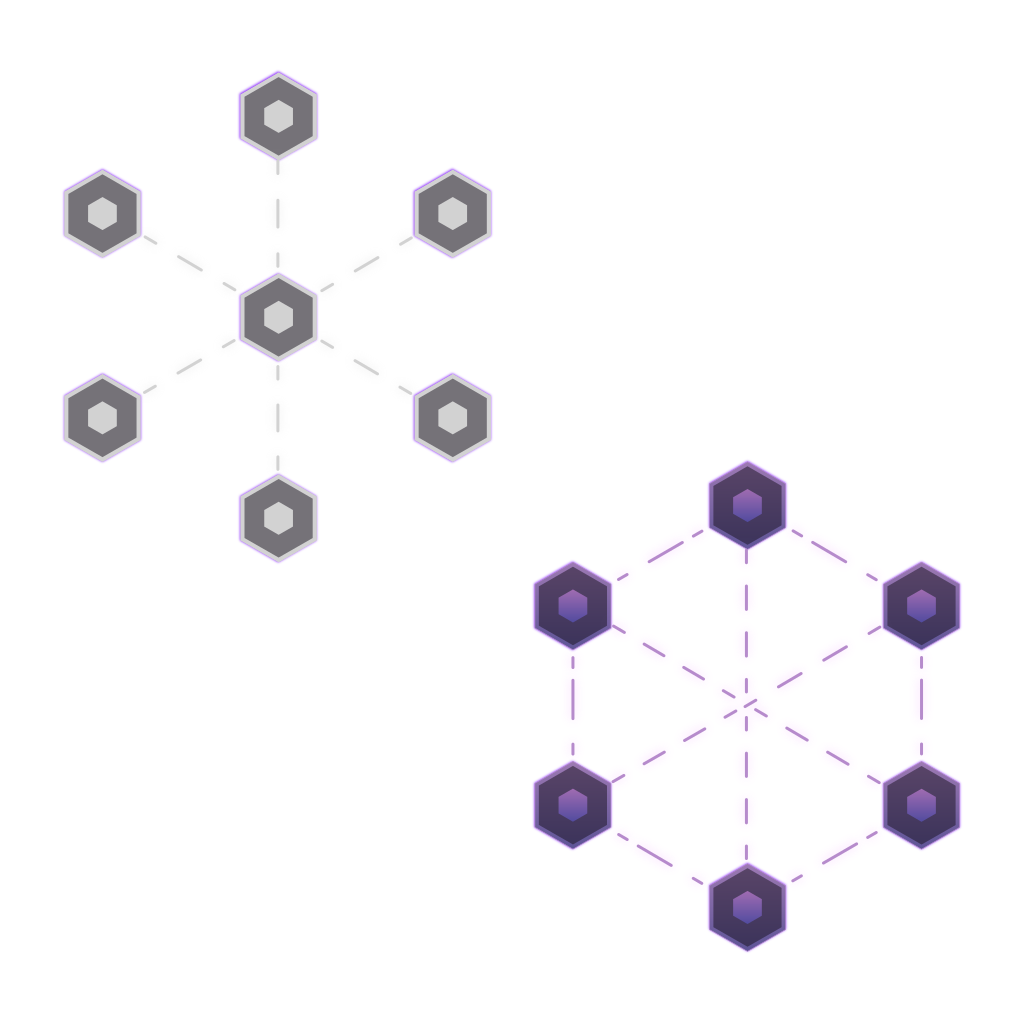
But whether something is decentralized isn’t just a yes or no answer. Are 10 controlling entities decentralized? How about 1000? One million? There isn’t a standard cutoff for something being sufficiently decentralized, so it makes sense to think of decentralization as a spectrum. Rather than the only choices being black and white, there are also many greys between them.
So we can say something is “more or less decentralized than something else” rather than “centralized or decentralized.” A high degree of decentralization is required for a neutral monetary system to resist state-level censorship. Newer blockchains often trade decentralization for scalability, but they leave themselves vulnerable to the same pressures from societies and governments that fully centralized platforms feel. They may end up engaging in the same censorship seen on centralized social media networks.
Knowledge Check 6
Different blockchains use different amounts of decentralization.
-
[ ] True
-
[ ] False
Some Examples
Each blockchain has its own approach to the trilemma, and each has made tradeoffs to focus on its goals. Bitcoin and Ethereum prioritize security and decentralization over scalability, leading to long transaction finality time for Bitcoin and limited block space on Ethereum. When demand to use smart contracts spikes, especially for DeFi, Ethereum fees rise; during peak demand in 2021, a single transaction could cost tens of dollars.
Rising fees provided an opening for alternative Layer 1’s like BNB Chain, which prioritized scalability over decentralization for higher transaction throughput and cheaper fees. Third-generation chains like Solana use novel methods to solve the trilemma, but all blockchains are still subject to these basic constraints. Each chain’s choice defines its ecosystem through the foundational effects that come from that choice.
So what can be done?
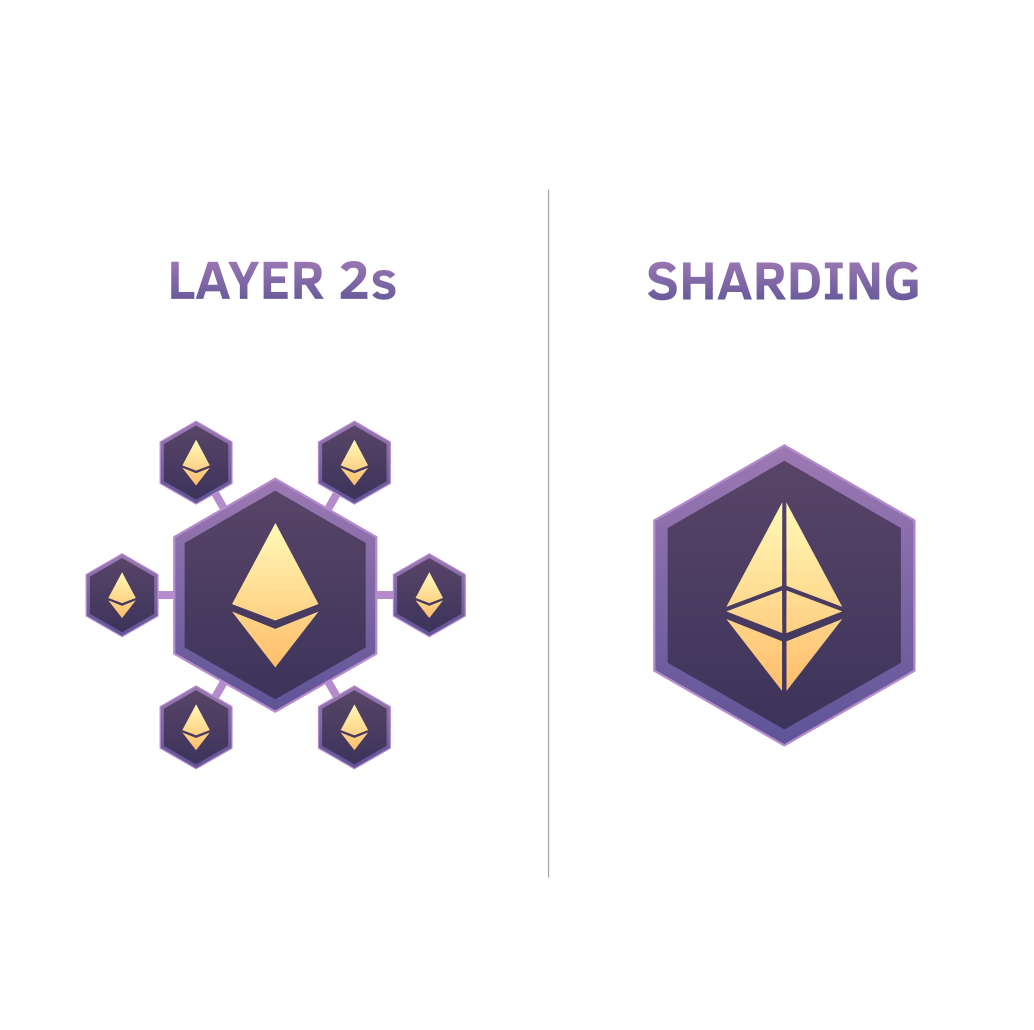
So if Ethereum has prioritized high security and decentralization, how can it scale to serve the needs of all users as the global financial network it aims to become? The Ethereum roadmap explored two answers: Layer 2s and blockchain sharding.
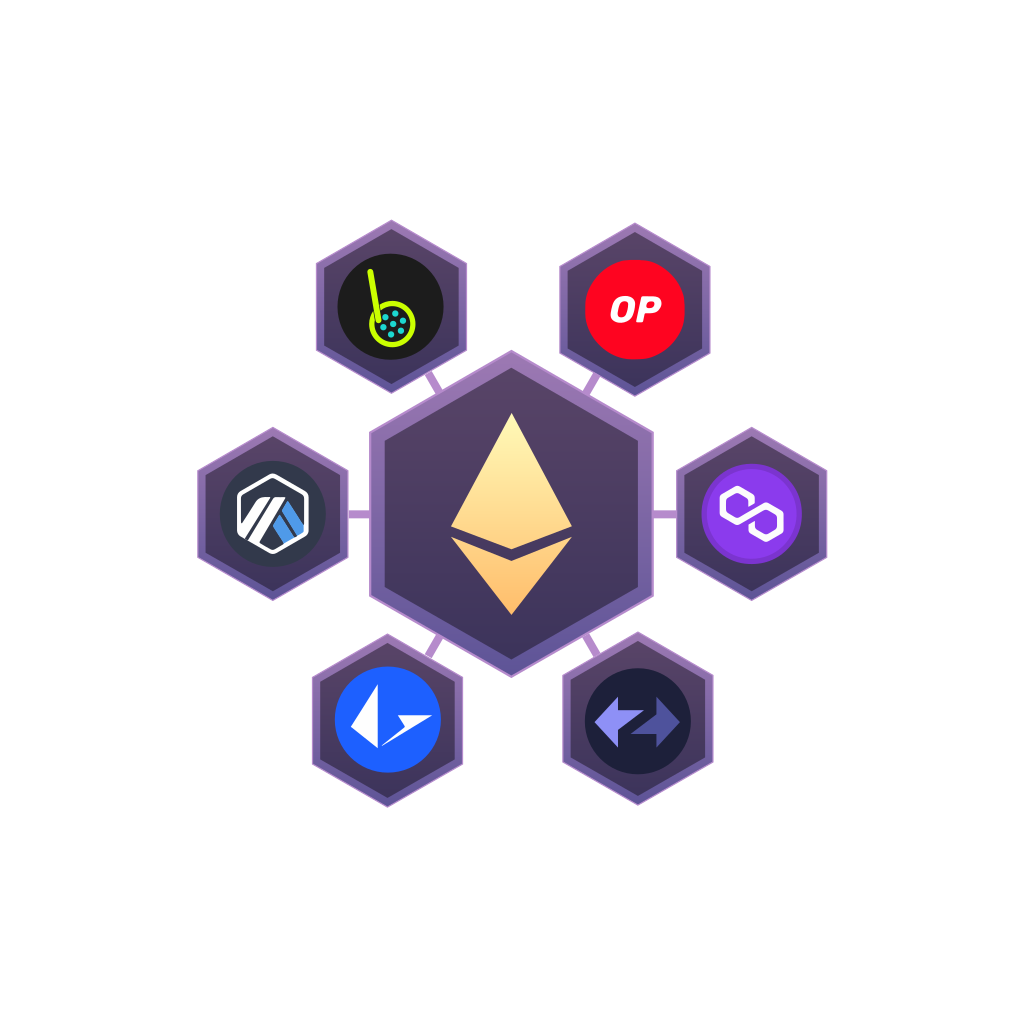
Layer 2s increase Ethereum scalability without compromising on the other two parts of the blockchain trilemma. They are an additional layer sitting on top of the main blockchain, relying on the main chain for security but allowing users to benefit from reduced fees and faster transactions. We will explore them in more detail in our Layer 2 lesson.
Sharding would have split the blockchain into multiple parallel chains, like adding more lanes to a road. Ethereum set that plan aside for a simpler one: making block data cheaper for Layer 2s to use (added in 2024) and raising capacity step by step, without sacrificing security or decentralization.
Knowledge Check 7
Layer 2s:
-
[ ] Provide their own security
-
[ ] Increase scalability for the main blockchain
-
[ ] Increase fees for users
-
[ ] Increase finality time for users
The future of Ethereum
The Ethereum network keeps evolving its scalability without sacrificing the other aspects of the trilemma. The Merge to Proof of Stake consensus (2022) cut the network’s energy use by over 99%, and cheap block data for Layer 2s arrived in 2024. Scaling is continuous work: each upgrade makes Ethereum faster and cheaper to use while maintaining security and decentralization as core tenets. The Ethereum Foundation has an excellent webpage on the Ethereum roadmap.
Meanwhile, many Layer 2 protocols build on top of Ethereum to help meet user demand without requiring updates to the Ethereum protocol itself. These Layer 2 protocols rely on Layer 1 Ethereum to provide decentralized security while they provide scalability; the diversity of Layer 2s makes a decentralized ecosystem! Leading rollups include Arbitrum, OP Mainnet, and Base; Polygon PoS is a popular sidechain with its own separate security.
Knowledge Check 8
Ethereum upgrades include:
-
[ ] Using Layer 2s and cheaper block data to increase scalability
-
[ ] Maintaining decentralization and security as core principles
-
[ ] Reducing energy consumption with Proof of Stake consensus
-
[ ] All of the above
What does it mean for Explorers?
Users need low fees to learn and explore the technology with low barriers to entry and low costs from mistakes, even more so at the beginning of their journey. The Ethereum blockchain is not ideal yet, but its values make it one of the best candidates for fulfilling the dream of a global financial computing system. Explorers can learn to interact and use Ethereum without paying massive fees; using Layer 2s allows Explorers to have the security and decentralization benefits of Ethereum combined with the higher scalability.
The next lesson will explain Layer 2 solutions and how to get started. Onward explorers!