
Staking Ether
This is a summary and walkthrough for our ’Staking on Ethereum’ lesson and quest. Check out the full lesson to level up your knowledge and claim your badge!
Key Takeaways
What is Staking?
Put simply, staking on Ethereum is an action that allows anyone to help secure the network. You lock a portion of Ether on the network, aiding network validators, and earning rewards.
Staking is an essential part of Ethereum’s consensus mechanism: the separation of legitimate transaction and blocks from the fraudulent ones, in a decentralized way. This sorting is integral for maintaining a fair economy across the network.
This might sound familiar, because it has the same goal as mining does on the Bitcoin network. Yet there’s a crucial difference between mining and staking: On Ethereum, staking can be accessed by anyone. You don’t need a powerful computer to process transactions, like you would for mining on Bitcoin.
So by simply buying Ether and locking it in a network smart contract, you can become a staker. In doing so, you’ll help keep Ethereum running smoothly, and earn rewards in return!
Start Staking with rETH
Now, the best way to get involved in securing Ethereum is to run a validator node. It grants the most rewards, and has the biggest impact on network decentralization. The problem is… it requires 32 ETH, some technical knowledge, and a dedicated computer with 24/7 power and internet access. That’s a tall order for most Explorers. Fortunately, innovators within the Ethereum community have created an easy entry point that anyone can use to get involved: staking pools and liquid staking tokens (LSTs).
Rocket Pool is one of the best-known decentralized staking protocols, with an approach granting high positive network impact. By locking Ether in one of their staking pools, you’ll mint rETH. While minting rETH directly from the Rocket Pool smart contract has the largest impact on network decentralization, you can also buy it on a decentralized exchange. In holding this token, you’ll begin earning staking rewards. Returns vary with network activity, historically a few percent per year.
With rETH, staking rewards are added straight to the value of the token: If you hold 1 rETH today, you will still own 1 rETH in a year. It will just be worth more.
Prerequisites
- You’ll need some regular ETH on one of the following networks: Ethereum, Optimism, Base, Arbitrum or Polygon (POS).
Walkthrough
Option #1: Minting New rETH
Requires >0.01 ETH, and only works on Ethereum Mainnet.
1. Head over to https://stake.rocketpool.net/ and connect your wallet.
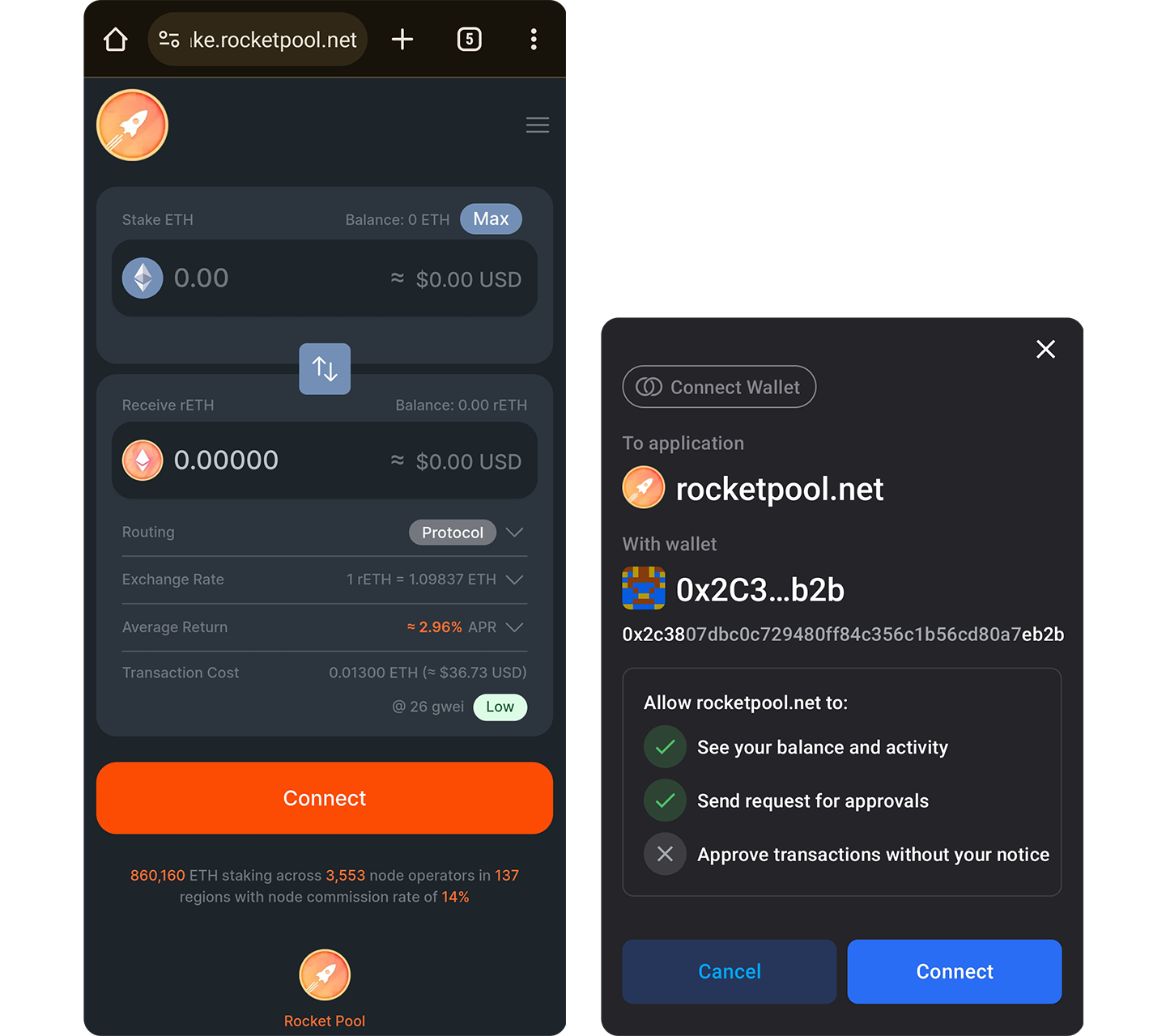
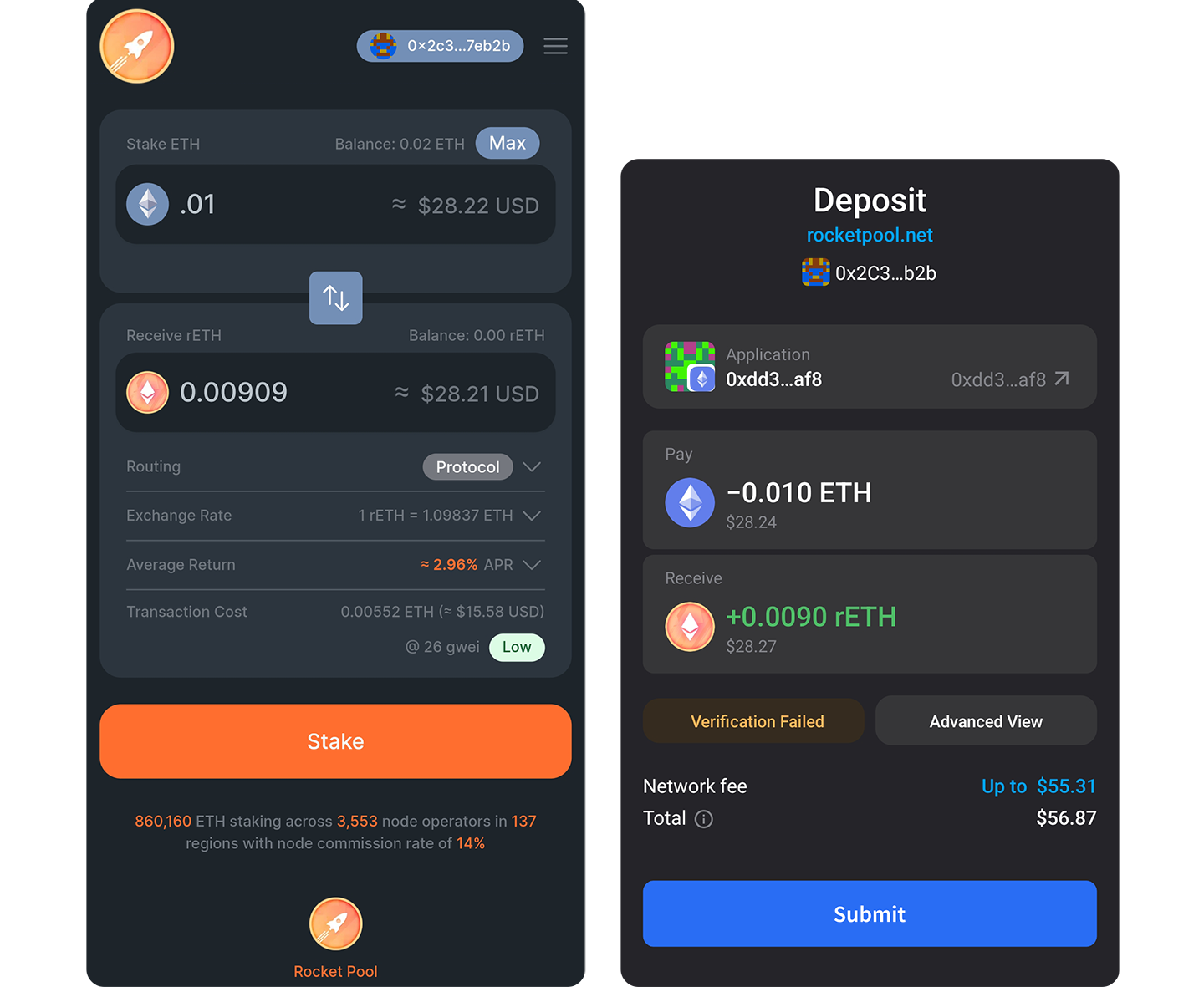
2. Enter the amount you’d like to stake, hit ‘Stake’, and then in your wallet hit ‘Submit’.
Your rETH will land in your wallet once your transaction has been processed. It’s that easy.
Option #2: Buying rETH on a Decentralized Exchange
No minimum balance requirements, and works on all networks listed above.
1. Jump to https://app.uniswap.org/swap and connect your wallet.
We’re swapping on the Optimism layer 2 network, because gas fees are a lot lower than on Ethereum mainnet. Learn how to bridge to Optimism, in our “How to Fund Your Wallet on L2” article.
Before swapping on a smaller network, check the quoted price and liquidity: rETH pools there can be shallow, giving you a worse rate.
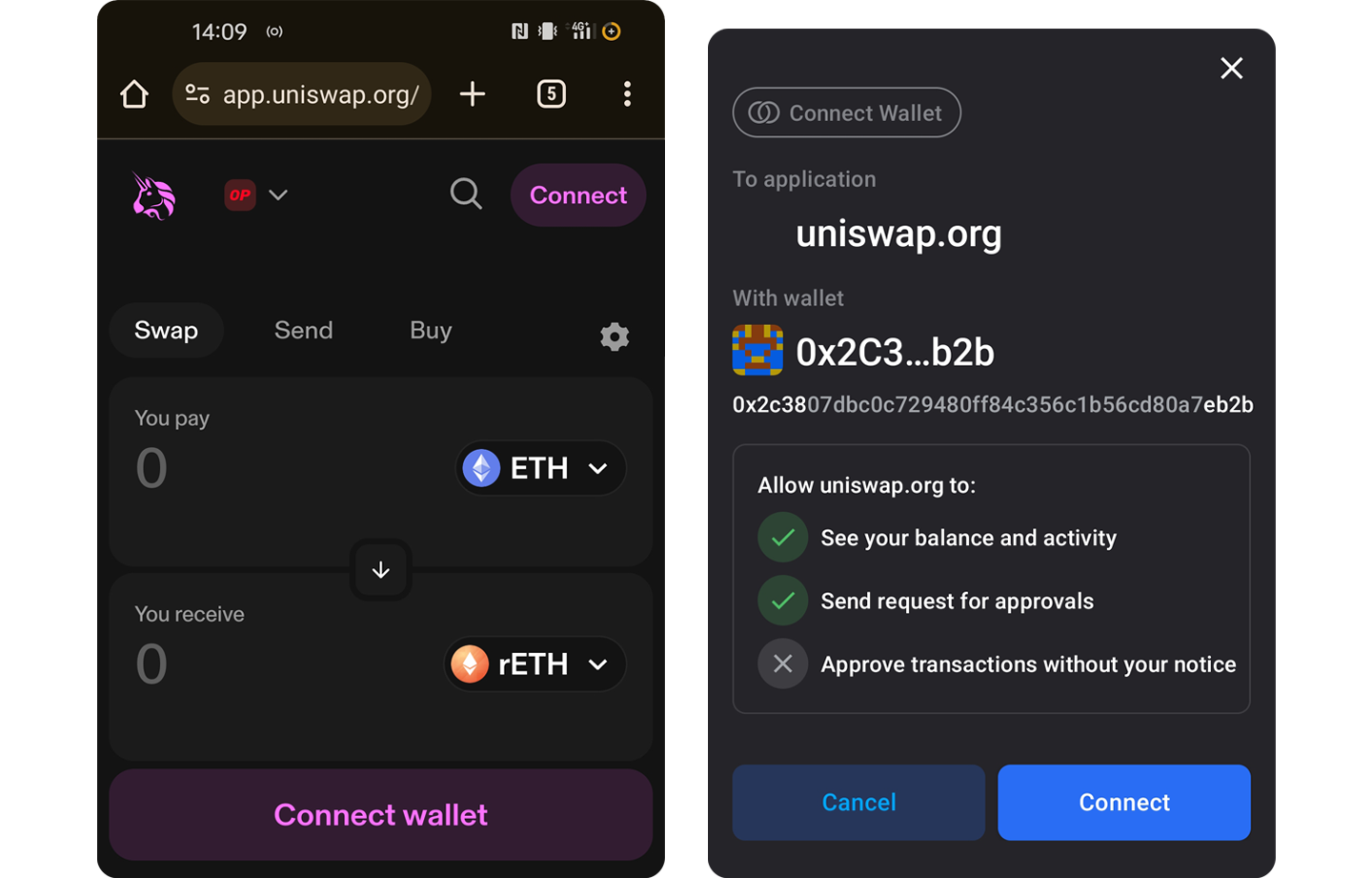
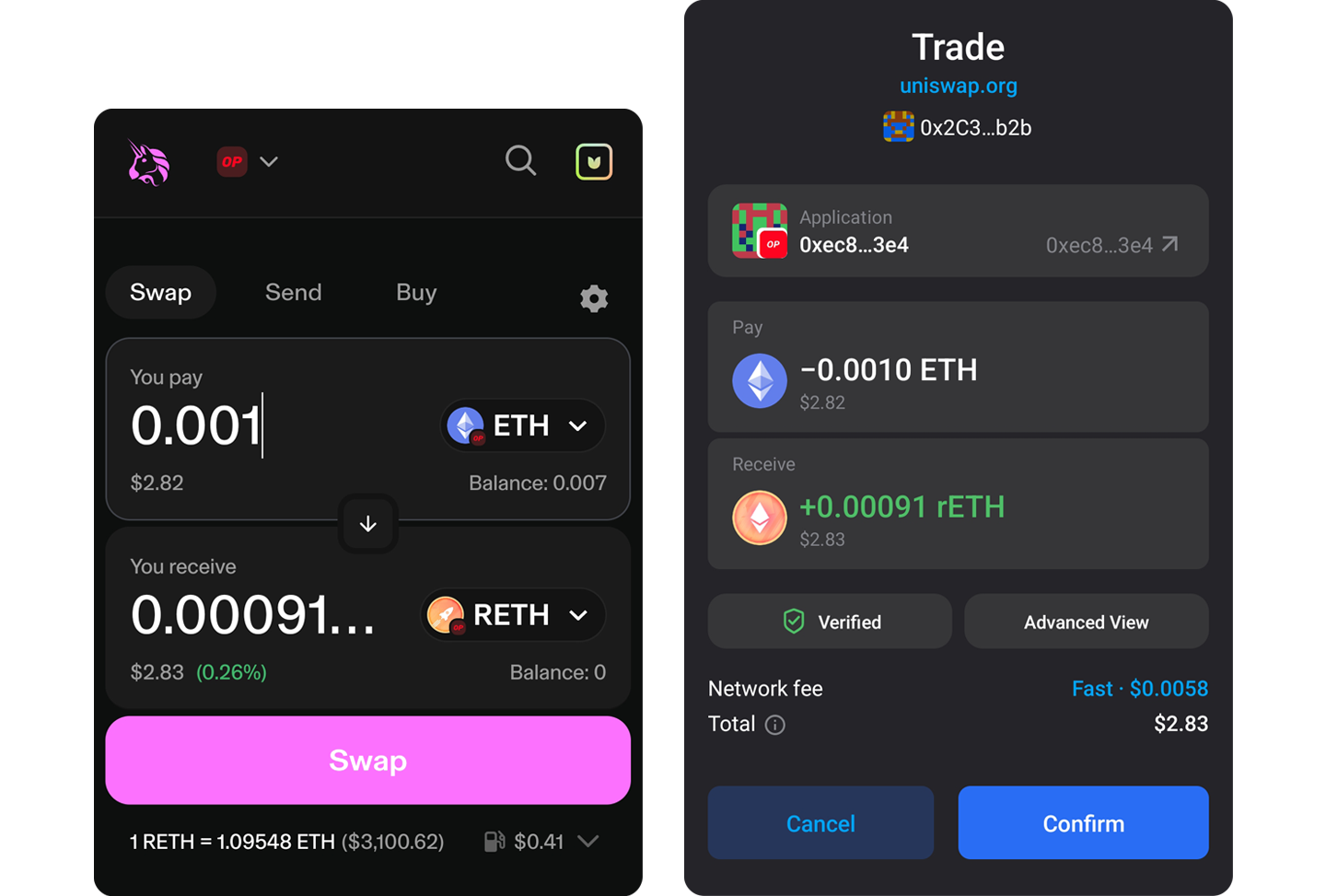
2. Enter the amount you’d like to hold, hit ‘Swap’, and then in your wallet hit ‘Confirm’.
Your rETH will land in your wallet once your transaction has been processed. It’s that easy.
It’s time to become a guardian of Ethereum! We hope you’ve enjoyed this entry in the Explorer’s Handbook: ‘’Staking Ether”.
Don’t forget to collect this entry if you want to own a copy for easy reference on your travels, and to support future content at Bankless Academy.
Safe travels, Explorer!
FAQ
What are the risks of staking?
It depends on the method used, but the one shared risk is that the validator nodes you’re involved with could get slashed. In most staking pools and centralized exchange staking, these kinds of losses are diluted across the entire platform (everyone shares the loss, diminishing its impact) or even insured.
Other risks include:
-
Solo Staking: A bug in the validator node’s chosenvalidator clientsoftware. -
Staking Pools: A bug in the staking pool’s smart contracts, or the validator client software. Audits reduce this risk but never fully remove it. -
Liquid Staking Tokens: The market price of an LST like rETH can trade slightly above or below the value of the Ether it represents. -
Centralized Exchange Staking: Sudden bankruptcy of the exchange, and loss of any stake in it.
The potential impact of each risk is really difficult to predict, but it’s safe to say that staking Ether is more risky than simply holding it. Where there’s reward, there’s risk! Only invest what you’re willing to lose.
Does all staking benefit Ethereum?
Benefit comes in the form of decentralization: you want as many independent node operators as possible.
-
Solo Staking: Maximum decentralization, as this typically means just a few nodes under one person. -
Staking Pools: It depends on the platform. Some staking providers only allow specific people to act as validator nodes within their pools. That means many nodes under a few people, a centralizing force. Rocket Pool is one of the few providers that allow anyone to become the node operator of a staking pool. This makes their platform one of the best staking options for citizens of Ethereum. -
Centralized Exchange Staking: Much like the centralizing forces within staking pools, many nodes under one entity is bad for Ethereum.
Do staking rewards change?
Yes, rewards depend on two key factors:
-
Network Activity: Generally speaking, in times of low traffic rewards are lower, and in high traffic they’re higher.
-
Number of Validator Nodes: With more participants, rewards are further divided.
Rewards also change based on the staking method chosen. Check out our “Staking on Ethereum” lesson to learn more!
How do I run a validator node?
If you want to become a solo staker, you’ll need the full 32 ETH, as well as your validator hardware. Check out this great guide by CoinCashew.
You can also run a node through a staking pool like Rocket Pool with a fraction of that (4 ETH per validator as of 2026), where other participants supply the remaining Ether. Of course, you’ll still need your validator hardware. Check out the documentation over at Rocket Pool to get started! And no hardware is needed to simply hold rETH: anyone can join with any amount of Ether.
Author
Tetranome is the Project Champion at Bankless Academy, focusing on user experience, interface, design, and content.
Patron
This article is funded by Rocket Pool.