▶Lesson ContentUpdated
Staking on Ethereum
Welcome, Explorer, to your next lesson!
Today, we’ll look at the process of “staking”: one simple way to build digital wealth.
Staking is similar to mining on the Bitcoin network: they’re both systems for letting participants process transactions on the blockchain in exchange for rewards. They keep our networks decentralized.
However, there’s an important difference between mining and staking. Staking on Ethereum doesn’t require a powerful computer to compete against others. Simply locking Ether (ETH) in a network smart contract keeps Ethereum running and rewards you.

Ethereum Wants You!
Think of staking like an “internet bond”.
Just like supporting your government through bonds gives financial returns, supporting Ethereum brings rewards! Even better, like government bonds, staking is a way to show financial support for your values and the world you want to live in.
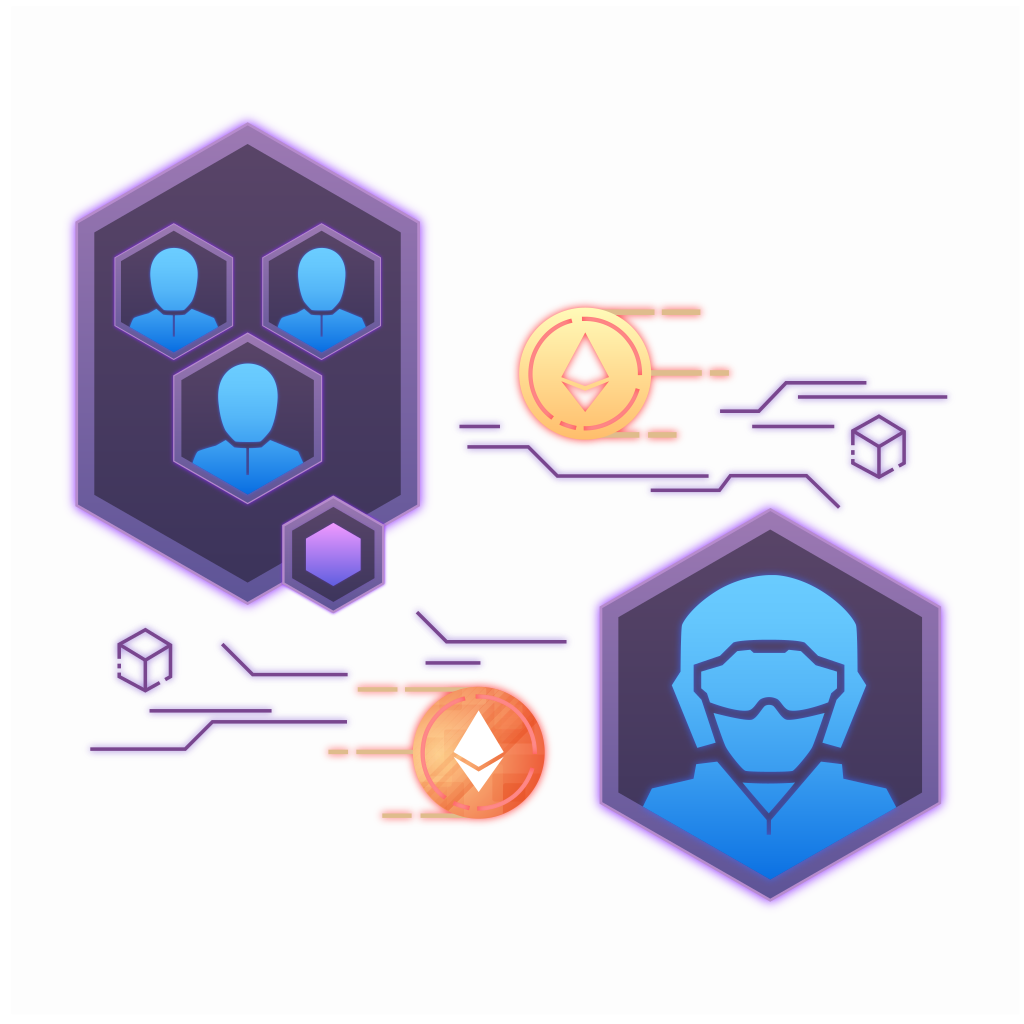
When you stake Ether, it is assigned to a validator node working to process transactions on Ethereum. The more Ether staked, the more nodes Ethereum can have. With more nodes, Ethereum becomes more decentralized and secure.
As a staker, you become a guardian of Ethereum!
Now, let's take a deep look into staking mechanics and discover a stress-free and low-cost opportunity to start your staking journey today.
Grab your gear, let’s go!
Blockchain Security
Validator nodes are key to a secure and legitimate economy on Ethereum. They protect the blockchain from fraud.
Fraud in the blockchain world looks like a user manipulating balances or creating non-existent crypto. Ethereum’s way of curbing it is ensuring that every transaction is valid and no participant has power over others. This fairness, known as credible neutrality, is vital. Why? Nobody wants to be a part of an economy where there's deceit and distrust; it will eventually collapse.
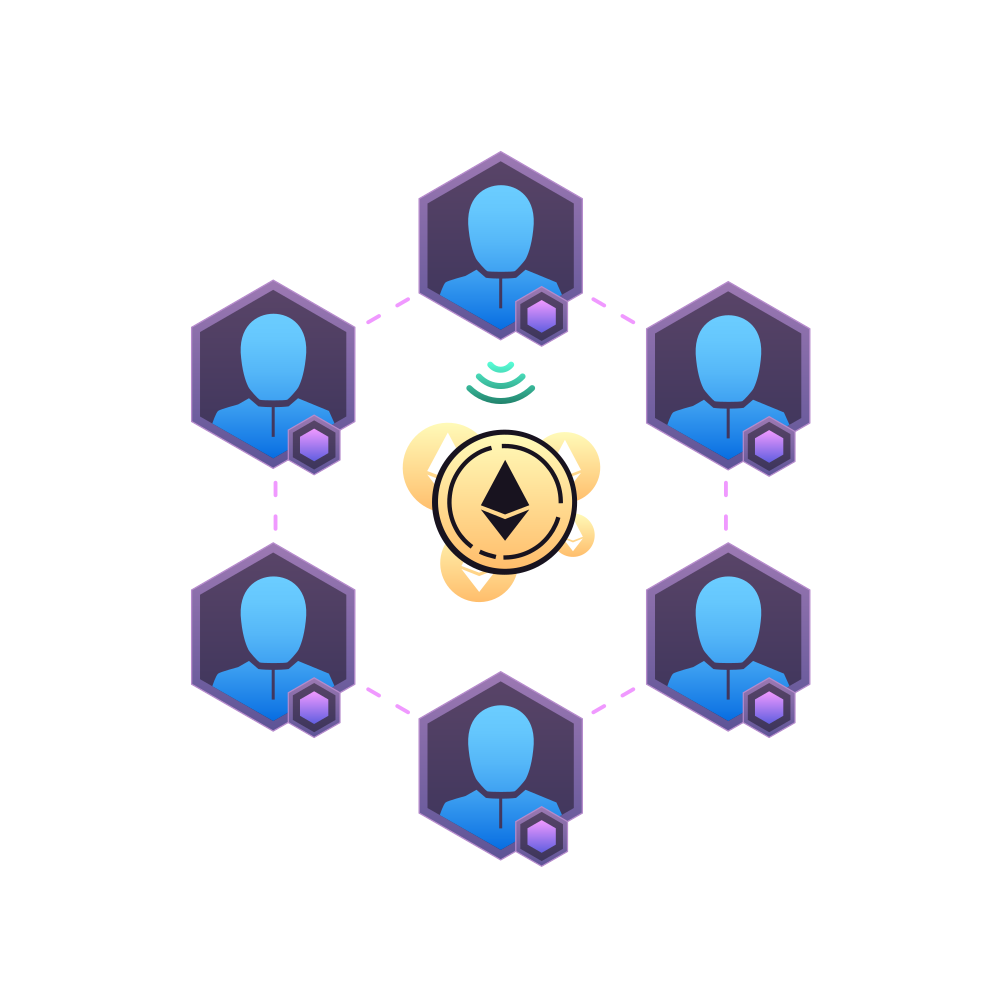
In a healthy blockchain, validator nodes share one goal: to reach decentralized agreement, across the network, on the state of the blockchain. Nodes scan transactions, check them against the blockchain’s history, and vote on their validity. Transactions that pass node consensus as valid are added to the blockchain.
Knowledge Check 1
How do validator nodes prevent fraud on Ethereum?
-
[ ] By overpowering each other.
-
[ ] By creating non-existent crypto for certain people.
-
[ ] By reaching decentralized agreement on valid transactions.
Proof-of-Stake
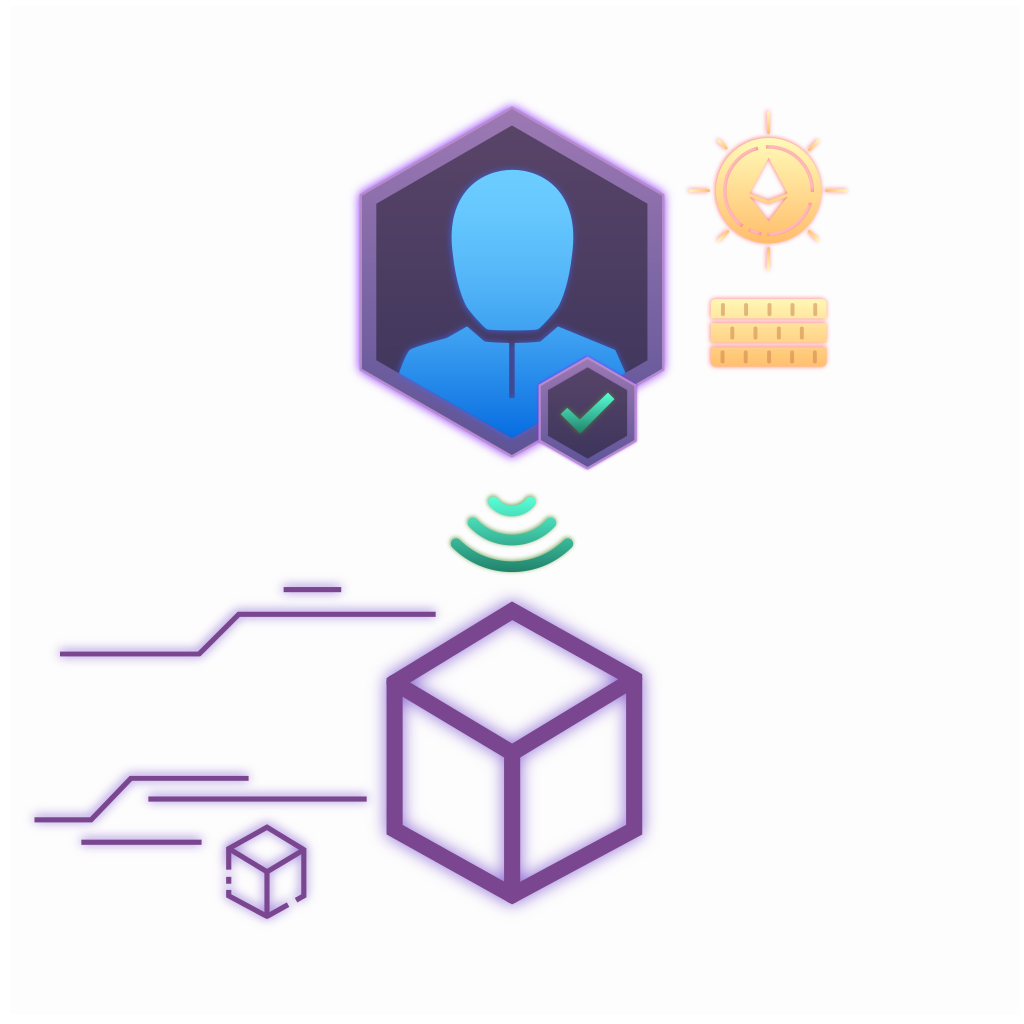
Users who want to run a validator node must lock at least 32 ETH, and that’s a lot of money. (Since 2025 a single validator can also hold a larger balance, and stakers can exit anytime through a queue.) In exchange for taking a large financial “stake” in the network, the node operator is allowed to propose and review blocks of transactions on Ethereum, and earn rewards. Think of blocks as groups of transactions submitted to the network.
The network’s consensus mechanism randomly selects a validator node to propose the next block and its decision is double-checked by other nodes to ensure honesty. When a node successfully proposes a block, its stake grows.
Slashing
When a node provably cheats, like signing two conflicting blocks, its stake is slashed: it loses a chunk of its Ether. Being slow or offline is not slashing; that only costs a small penalty. This way, staked Ether becomes a security deposit where nodes are incentivized to be honest and keep Ethereum running smoothly.
For an attacker to approve fraud on Ethereum, they must have control over majority of the validator nodes and thus, staked Ether. Fortunately this can't happen if everyday users are involved in staking. Decentralized ownership of the network divides the power to make decisions.

Knowledge Check 2
True or False: Validator nodes caught cheating, like signing two conflicting blocks, lose part of their stake.
-
[ ] True
-
[ ] False
Validating Transactions
Let's get into the step-by-step process of how nodes come to agreement using Proof-of-Stake consensus:
- Staking: A
node operatorlocks 32 ETH on the network and begins running avalidator node. - Block Building: Users submit transactions ordered into
blocksbyblock builders. - Proposer Selection: An algorithm selects a validator node to propose the next block to be added to the blockchain.
- Block Proposal: The
block proposerreviews potential blocks and selects one, granting theirattestationif valid. - Cross-Verification: Other validators double-check the block and grant attestation if valid. Invalid blocks are simply ignored and never join the chain.
- Block Addition: The valid block is added to the Ethereum blockchain.
- Rewards: The block proposer earns a
block rewardand transaction tips. The other validators are also rewarded.
Knowledge Check 3
What is the name of the validator node selecting the next block to be added to Ethereum?
-
[ ] Staker
-
[ ] Block builder
-
[ ] Block proposer
Ethernomics
For providing Ether to a validator node, stakers earn a portion of its rewards.
Rewards received by nodes are based on various ecosystem factors and can change. Simply put, the rewards are a portion of transaction fees and a small amount of newly issued Ether added to new blocks.
Annual yield varies over time, historically a few percent on staked Ether. The exact amount is based on two key factors:
- 📈 Network Activity: Generally speaking, if traffic is low rewards are lower. If traffic is high, they’re higher.
- 👥 Number of Validator Nodes: Rewards get further divided with more participants.
Yields also change depending on how exactly you stake your Ether. Let’s look at our options.

Types of Staking
You’ll typically need to lock 32 ETH to run a validator node, but new staking methods have made guarding Ethereum available to everyone.
So, there are three ways to protect Ethereum:
- 📡 Solo Staking: Run a validator node yourself.
- ⛲ Staking Pools: Join a group of stakers and run a node together.
- 🏦 Centralized Exchange Staking: Join a “crypto bank” node.
Each method requires varying levels of technical knowledge to get set up, along with its own associated risks.
If you’re comfortable holding your private keys but don’t have 32 ETH, then consider joining others in a staking pool.
If you’re not yet okay with taking self-custody of your crypto, check out Centralized Exchange staking. In the mean time, take our Wallet Basics lesson and boldly take ownership of your crypto!
Types of Staking (Part 2)

Solo Staking
🟡 Requires 32 ETH 🟡 Technical Setup 🟢 Decentralizes Ethereum
Risks: Lost keys, slashed stake, offline penalties.

Staking Pools
🟢 Any amount of ETH 🟢 Easy Setup 🟡 Decentralized Options
Risks: Pool smart contract bugs, or lost keys.

Centralized Exchange Staking
🟢 Any amount of ETH 🟢 Easy Setup 🔴 Centralizes Ethereum
Risks: Exchange bankruptcy could take your funds.
Network Centralization
Any staking that leads to many nodes under one entity begins to centralize Ethereum.
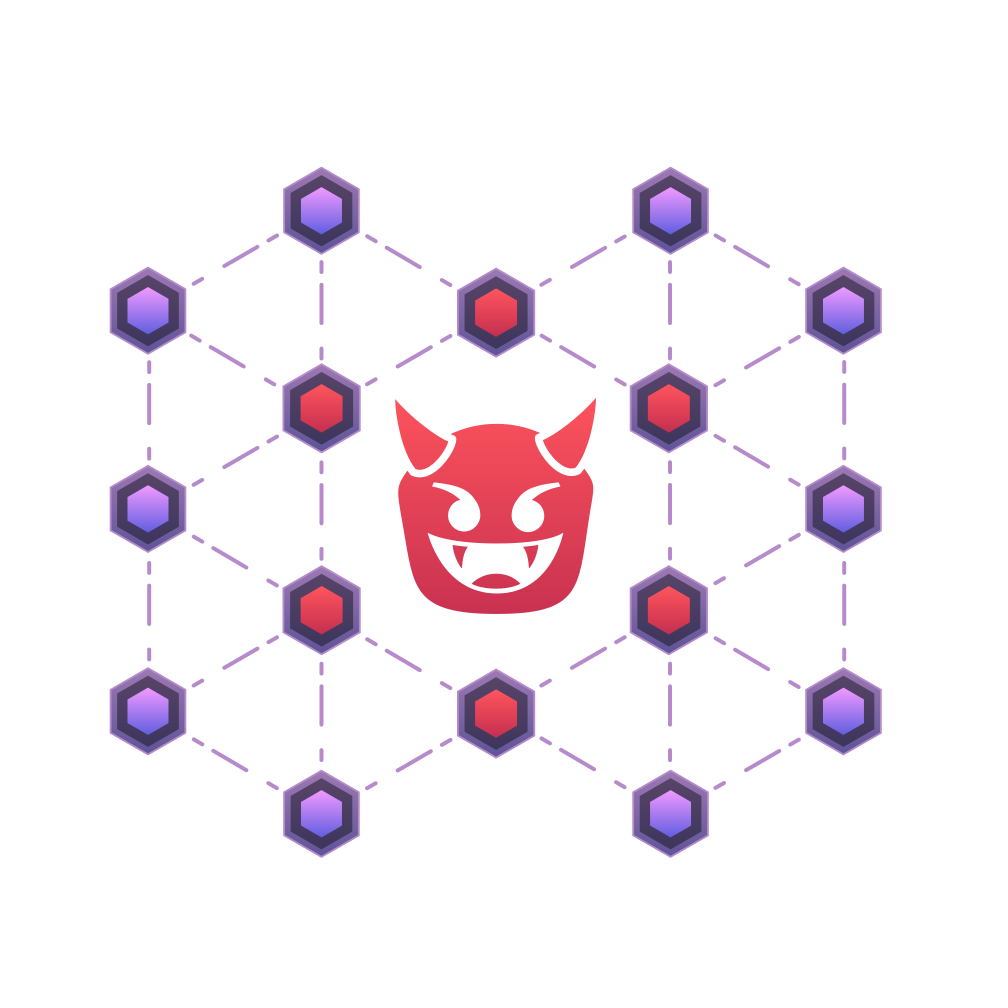
Imagine Ethereum as a web of connected validator nodes. When nodes are concentrated under one or a few entities, the entire web becomes imbalanced and unsafe. For this not to happen, we need lots of unique connection points.
A single entity gaining control over enough nodes is bad. This forces blocks of transactions through the centralized section of the web. The centralized entity could begin approving fraudulent blocks, or even denying valid ones. This would destroy Ethereum’s credible neutrality.
As its guardians, we must focus on staking methods that keep the web balanced and decentralized.
You may face many barriers with running your own validator node as a beginner. Instead, let's explore a beginner-friendly option to decentralized staking: staking pools.
Knowledge Check 4
What would happen if a single entity controlled a majority of validator nodes?
-
[ ] They could approve blocks including fraudulent transactions.
-
[ ] They would gain control of all validator nodes.
-
[ ] Ethereum would stop processing transactions altogether.
-
[ ] All of the above.
Staking Pools
The best part about staking pools is that they’re entirely run by smart contracts. You don’t have to meet the other stakers in person and you don’t have to trust them. You do however have to trust the smart contract.
Staking pools are organized by staking providers, digital platforms connecting stakers across the world! In staking pools, a node operator stakes a fraction of the full 32 ETH and runs the node, while other participants supply the remaining Ether. The node operator earns extra yield for their service.
The remaining staking participants are given “Liquid Staking Tokens” (LSTs) representing their membership to the pool. These tokens stand for a share of a pool’s staked Ether. The holder earns a portion of rewards equal to the represented stake, and can use them to redeem their stake at any time.
By simply holding an LST (like Rocket Pool’s rETH), you own a share of a staking pool. Yep, your Ether is decentralizing Ethereum and earning staking rewards!

Knowledge Check 5
Which entity hosts the staking pool?
-
[ ] The node operator.
-
[ ] The remaining staking participants.
-
[ ] The staking provider.
Liquid Staking Tokens
The best thing about LSTs is that even while your Ether is staked and gathering yield, it maintains a liquid form.
“Liquid” in this case means that it can still flow throughout the ecosystem. Think of holding a share of a staking pool… but you can use it as money! LSTs can be swapped, used as collateral for loans, or even deposited on restaking platforms, an optional strategy that adds extra risk for extra yield.
LSTs are great because they open access to staked Ether. Staking pools often have minimum deposit amounts for adding Ether to the pool (around 0.01 ETH). However, using LSTs, you can buy even smaller increments of staked Ether on your favorite decentralized exchange.
Network Centralization, Again!
Staking pools and LSTs have the same catch as the different staking methods: they function in different degrees of centralization and decentralization.
Staking providers like Rocket Pool have made sure that anyone, anywhere can be the node operator of a staking pool. This supports new node operators in building their 32 ETH stake, and helps to decentralize Ethereum. However, other providers only allow a small range of their contacts to run their nodes, making the centralization of staked Ether a risk.
If any entity gains over 33% control of all staked Ether, they could cause problems on the network. At 50%, they seriously threaten Ethereum’s credible neutrality.
Some large staking providers have come close to that 33% mark. Spreading stake across many providers keeps the network safe.
To guard Ethereum, we need to do our research. Even with staking pools we need to make choices that support decentralization.
Knowledge Check 6
True or False: Supporting new node operators helps to decentralize Ethereum.
-
[ ] True
-
[ ] False
rETH - Your Path to Decentralized Staking
It’s time to become a staker: a guardian of Ethereum.
For today’s quest, we’re taking ownership of a staking pool at Rocket Pool.
🪙 It’s simple: Mint or buy Rocket Pool’s liquid staking token, rETH.
As the first step on your staking journey, you’ll be funding a validator node to process blocks, in exchange for Ether rewards.
Note: With rETH, staking rewards are added to the value of the token. If you hold 1 rETH today, you’ll still own 1 rETH in a year. It will just be worth more.
Good luck on your quest, Explorer! May your commitment to Ethereum’s decentralized future be greatly rewarded.